Trying to lose weight can make even a simple lunch feel complicated. Should you eat fewer carbs? More protein? Skip the bread? Measure everything?
Fortunately, building a balanced plate for weight loss doesn’t have to involve a food scale, complicated meal plans, or a long list of foods you aren’t allowed to eat.
A few simple principles can help you create satisfying meals, manage portions, and develop eating habits you can actually maintain.
What Is a Balanced Plate for Weight Loss?
A balanced plate combines different food groups to provide protein, fiber, carbohydrates, healthy fats, and essential nutrients.
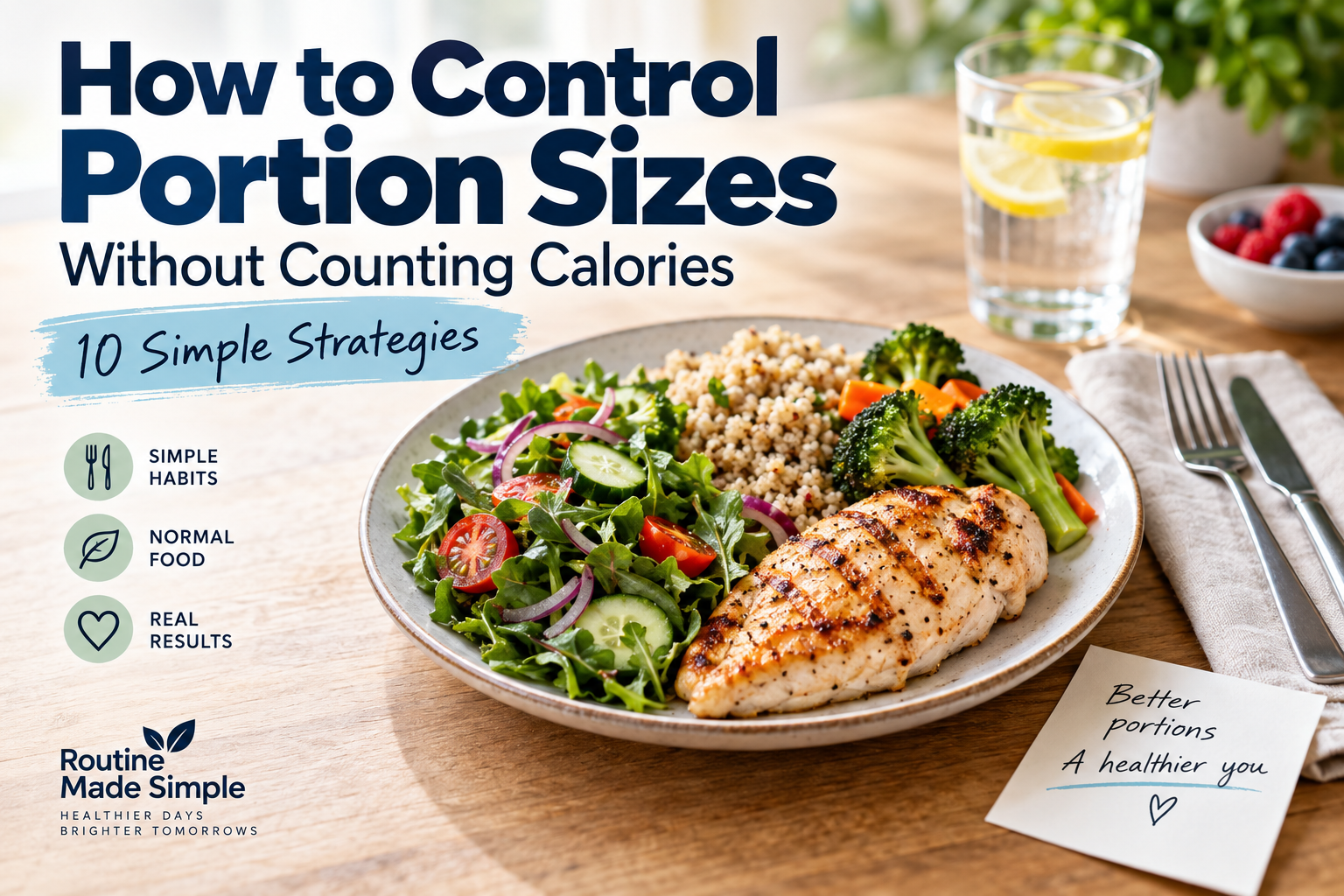
One practical starting point for building a balanced plate for weight loss is to divide your plate into three sections:
- ½ plate: non-starchy vegetables
- ¼ plate: protein-rich foods
- ¼ plate: whole grains or other starchy foods
Add a moderate amount of healthy fat, depending on the ingredients and how your meal is prepared.
This is a flexible guide, not a strict formula. Your individual needs may vary depending on activity, health, appetite, and personal preferences.
For additional guidance on creating nutritious meals, explore the USDA MyPlate recommendations.
1. Start With Vegetables
Vegetables are a useful foundation for a balanced meal because many are rich in fiber and water while being relatively low in calories.
Try filling approximately half your plate with foods such as:
- Broccoli, cauliflower, or zucchini
- Leafy greens and mixed salads
- Tomatoes, cucumbers, and peppers
- Carrots, mushrooms, or green beans
Fresh, frozen, and canned vegetables can all work. Choose options you enjoy and can prepare regularly.
When building a balanced plate for weight loss, vegetables can help add volume and variety without making meals unnecessarily complicated.
2. Include Protein in Your Meal
Protein contributes to muscle maintenance and can help make meals more satisfying.
Good protein options include chicken, turkey, fish, eggs, tofu, Greek yogurt, beans, and lentils.
You don’t need to eat the same protein every day. Variety can make healthy eating easier to maintain.
For a practical starting point, include a protein-rich food in each main meal. Adjust the portion according to your nutritional needs and the rest of your plate.
3. Keep Carbohydrates on the Plate
Carbohydrates aren’t automatically a problem when you’re trying to lose weight.
Whole grains, potatoes, fruit, and legumes can all be part of a balanced eating pattern. Many also provide fiber, vitamins, and minerals.
Instead of removing carbohydrates completely, pay attention to the type and amount you eat.
For example, you might pair grilled chicken and vegetables with brown rice, or enjoy baked potatoes alongside fish and salad.
A balanced plate for weight loss doesn’t require eliminating your favorite carbohydrate foods. It’s about finding portions that work within your overall eating routine.
4. Don’t Forget Healthy Fats
Healthy fats contribute to a nutritious diet and can add flavor and satisfaction to meals.
Examples include olive oil, avocado, nuts, and seeds.
Because fats are energy-dense, portions still matter. A drizzle of olive oil or a small handful of nuts may be enough to complement your meal.
5. Three Balanced Plate for Weight Loss Examples
Wondering what a balanced plate for weight loss looks like in everyday life? These three meals use familiar ingredients and require no complicated preparation.
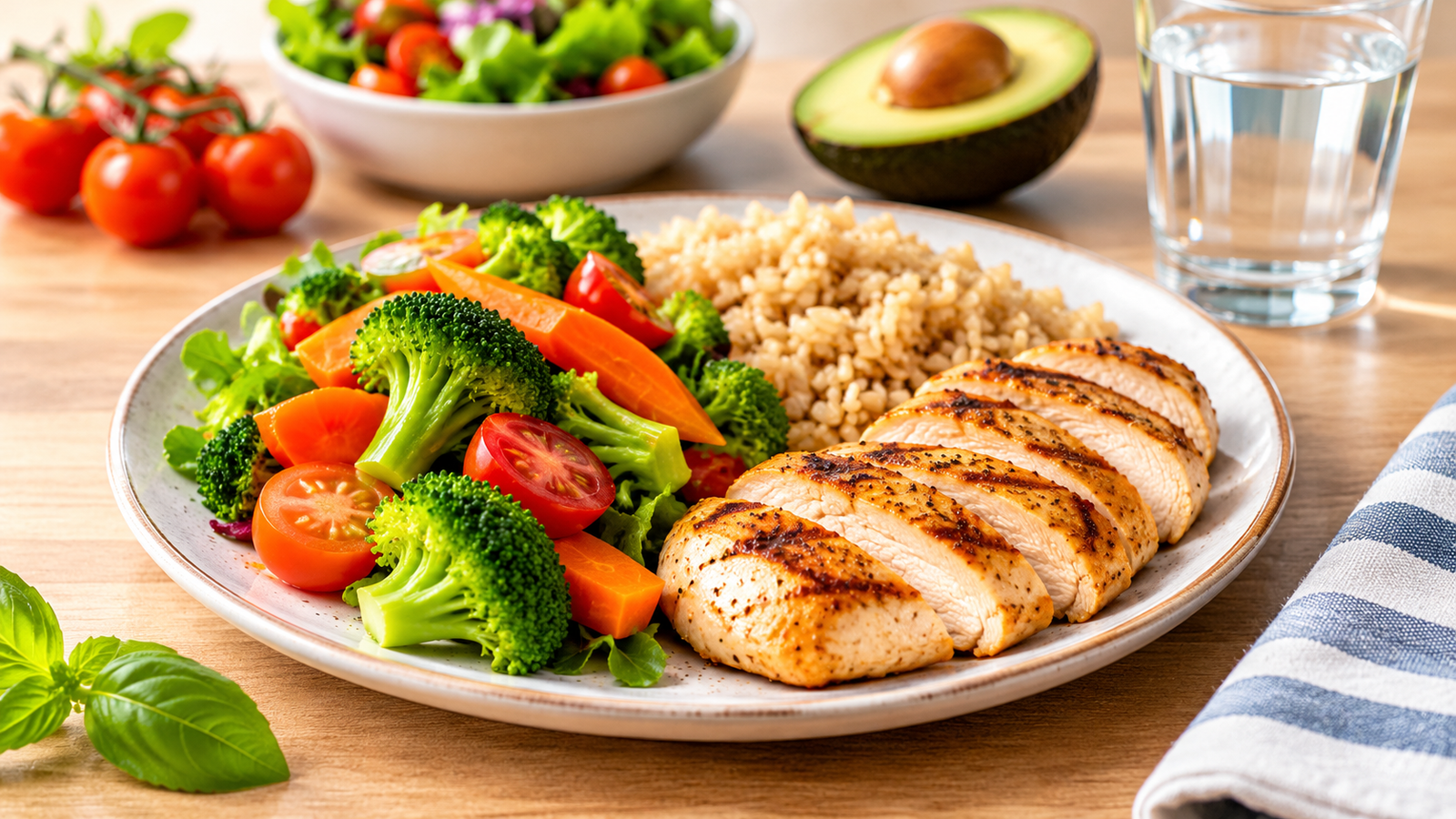
Lunch: Chicken and Rice
- Grilled chicken breast
- Brown rice
- Steamed broccoli and carrots
- A little olive oil or lemon dressing
This meal combines lean protein, vegetables, and a source of carbohydrates. You can prepare the chicken and rice in advance to make weekday lunches easier.
Dinner: Salmon and Potatoes
- Baked salmon
- Roasted potatoes
- Mixed green salad
- Tomatoes and cucumber
Salmon provides protein and omega-3 fats, while potatoes and vegetables make this a satisfying meal without requiring complicated ingredients.
Plant-Based Option: Lentil Bowl
- Cooked lentils
- Quinoa
- Roasted zucchini and peppers
- A light tahini dressing
Lentils contribute both protein and fiber. Combined with vegetables and quinoa, they create a versatile plant-based meal.
These examples are starting points, not fixed meal plans. Adjust the amounts and ingredients to suit your needs.
6. Do You Need to Count Calories?
Weight loss generally requires consuming less energy than your body uses over time. However, counting every calorie isn’t the only way to approach this.
Some people find calorie tracking helpful. Others prefer building consistent meals, adjusting portions, and paying attention to hunger and fullness.
A balanced plate can make those choices easier, but it doesn’t guarantee a calorie deficit on its own.
The most useful approach is one that supports adequate nutrition and feels sustainable in everyday life.
7. How Does This Work With Intermittent Fasting?
If you practice intermittent fasting, balanced meals are still important during your eating window.
For example, someone following a 16:8 schedule might have a balanced lunch and dinner, with an additional snack when needed.
The goal isn’t to eat as little as possible. It’s to build meals that provide sufficient nutrients and fit your schedule.
Intermittent fasting is optional, and it isn’t appropriate for everyone. Meal quality and overall energy intake still matter.
If you’re interested in meal timing, explore our simple 16:8 intermittent fasting guide for practical ways to organize your eating window.
8. Common Balanced Plate Mistakes
Even when using a balanced plate for weight loss, a few common habits can make the process more difficult than necessary.
- Eating only salad: A meal without enough protein or other satisfying ingredients may leave you hungry soon afterward.
- Avoiding all carbohydrates: Unnecessary restrictions can make your eating routine harder to maintain.
- Ignoring cooking oils and sauces: These can contribute substantial energy even when the main ingredients are nutritious.
- Using portions that don’t fit your needs: The plate method is a guide, not an exact measurement system.
- Expecting perfection: One meal doesn’t determine your long-term progress.
9. Build a Routine, Not Another Diet
The real advantage of the balanced plate method is simplicity.
You don’t need a different meal plan every week. You can use familiar ingredients, repeat meals you enjoy, and make gradual adjustments.
Some days your plate will look exactly like the guide. Other days it won’t. That’s normal.
Consistency over time matters more than making every meal perfect.
One useful habit is to plan two or three balanced meals that you genuinely enjoy and rotate them throughout the week. This reduces daily decisions and can make grocery shopping simpler.
10. Want More Structure for Your Daily Routine?
Healthy eating is only one part of developing a routine that works for you. Meal timing, hydration, sleep, and daily habits can also influence how manageable your plan feels.
If you’re exploring ways to simplify your routine, you can also learn about the Unicity Feel Great approach, which combines specific products with a structured daily schedule.
It’s an optional approach, not a requirement for weight loss or a substitute for balanced nutrition.
Frequently Asked Questions
Can I lose weight by eating balanced meals?
Balanced meals can support weight management by helping you manage portions and improve overall food quality. Weight loss still depends on your energy balance over time.
Do I have to give up bread, rice, or potatoes?
No. These foods can fit into a nutritious eating pattern. Consider their portions, preparation, and what you eat alongside them.
Is the balanced plate method suitable for everyone?
It’s a useful general framework, but individual needs differ. People with medical conditions, specific nutritional requirements, or a history of disordered eating may benefit from personalized professional guidance.
How often should I use the balanced plate method?
You can use it as a general guide for lunch, dinner, or other main meals whenever it is practical. It doesn’t need to be followed perfectly at every meal to be useful.
Final Thoughts: Keep Your Balanced Plate Simple
Building a balanced plate for weight loss doesn’t require complicated rules or perfect meals.
Start with vegetables, include satisfying protein, choose carbohydrates that work for you, and add healthy fats in reasonable amounts.
Most importantly, focus on creating a routine you can repeat—not just a plan you can follow for a few days.