Can a routine built around intermittent fasting, a yerba mate drink, and a fiber supplement actually make a difference?
That’s a fair question. It’s also a better question than asking whether a supplement is a miracle. When I started paying closer attention to my own eating habits, I became interested in the practical side of intermittent fasting: what makes a routine easier to follow, and what the evidence actually supports.
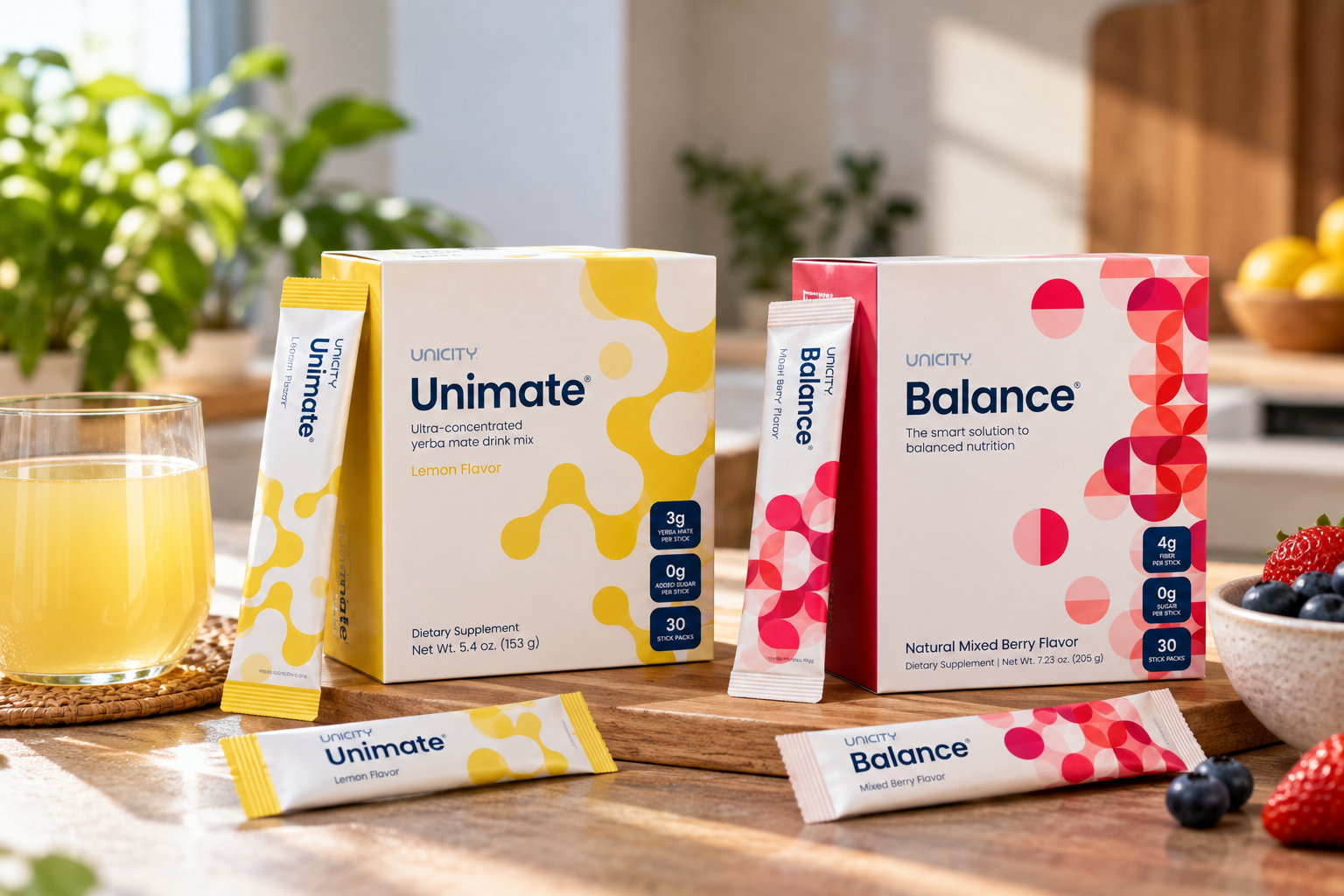
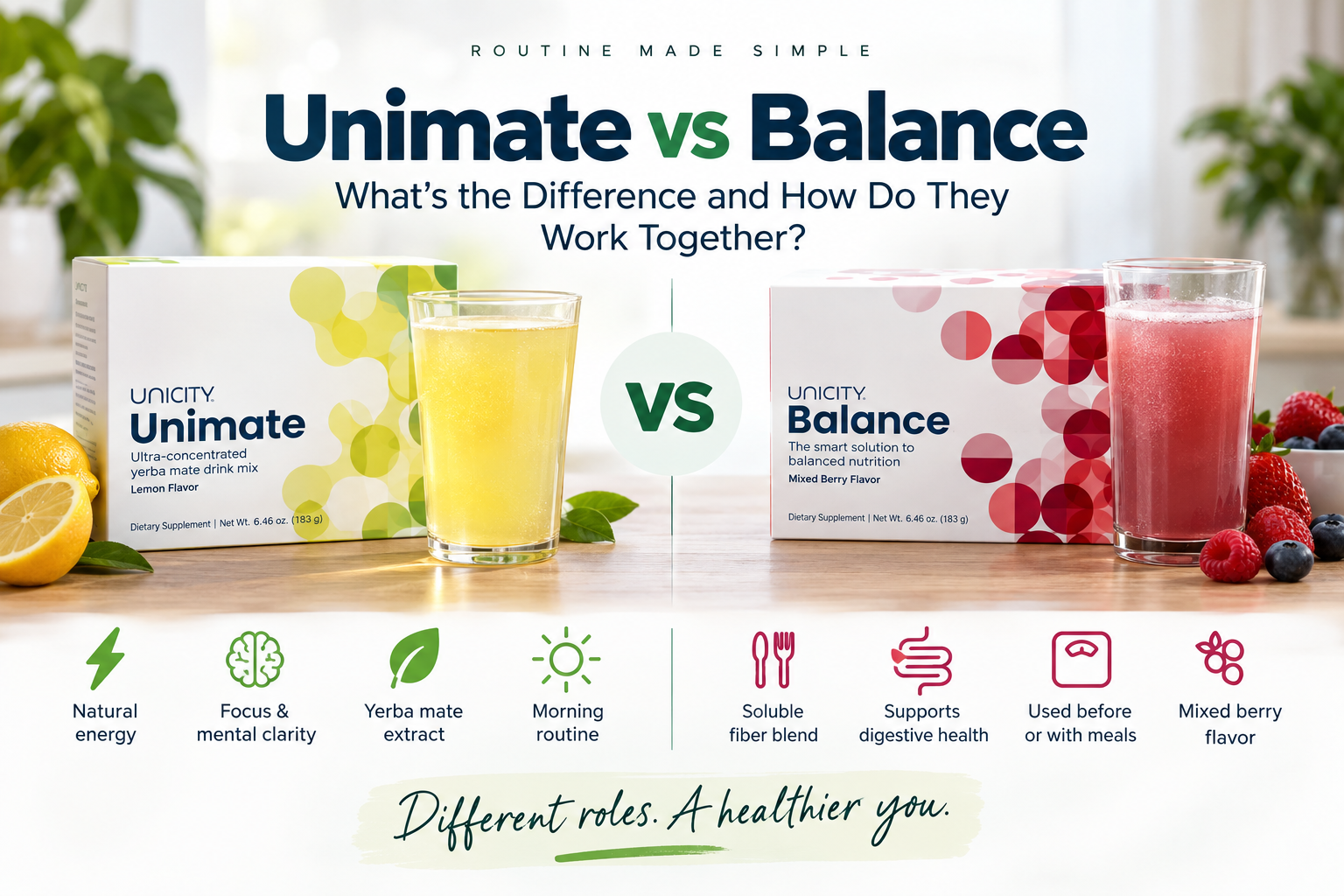
Unicity Feel Great combines three elements: an intermittent fasting schedule, Unimate (a concentrated yerba mate supplement), and Balance (a soluble fiber supplement). The company has published summaries of studies examining the program and its ingredients. Some of the results are interesting. But the details matter.
This article looks at the available Unicity Feel Great research, including a 90-day real-world study, a preclinical investigation of Unimate and GLP-1, and a controlled study of Balance Apple. We’ll cover what researchers measured, what they found, and what we still cannot conclude.
Curious about the routine?
See How Feel Great Works in Everyday Life
Explore how Unimate, Balance, and intermittent fasting fit together, what the routine involves, and what to consider before starting.
EXPLORE THE FEEL GREAT ROUTINE →
Disclosure: Routine Made Simple is run by an independent Unicity distributor. Links may lead to products from which I may earn compensation.
What Is the Feel Great Program?
Feel Great is a structured routine built around three components:
- Intermittent fasting: a planned period without food, often using a 16:8 schedule.
- Unimate: a yerba mate-based supplement containing naturally occurring plant compounds and caffeine.
- Balance: a soluble fiber supplement intended to be used around meals, according to the product’s current instructions.
The idea is straightforward: use a consistent eating window, pay attention to meal habits, and incorporate the two products as directed. That does not mean the routine is appropriate for everyone, or that the products can replace nutritious food, prescribed treatment, or medical advice.
If you are new to eating windows, start with our guide to starting intermittent fasting before choosing a schedule.
Study 1: What Happened After 90 Days on Feel Great?
The most directly relevant document is a Unicity research summary titled Real-World Improvements in Metabolic Health Following 90 Days on the Feel Great Program. It describes an observational study of US subscribers who followed the program in everyday conditions.
Participants were instructed to fast for 16 hours daily, consume two servings of Unimate, and take one serving of Balance with a meal. They tracked their routine in the Feel Great Fasting app. The primary outcome was HbA1c, a blood marker reflecting average glucose levels over roughly the previous two to three months.
The HbA1c results
Of 478 enrolled participants, 111 provided both baseline and follow-up HbA1c measurements. In that group, average HbA1c fell by 0.2 percentage points over 90 days.
Among the 63 participants whose starting HbA1c was in the prediabetic or diabetic range, the average reduction was 0.4 percentage points. Of those 63, 24 people (38%) moved into a lower-risk HbA1c category. Their average reduction was 0.85 percentage points.
Those are meaningful observations within the group that completed testing. However, they should not be interpreted as proof that Feel Great treats or prevents diabetes.
What about body weight?
Weight measurements were optional and self-reported. Among the 72 participants included in the weight analysis, the average reported loss over 90 days was 10.4 pounds (about 4.7 kg). A smaller group of 31 participants reported an average waist reduction of 2.7 inches (about 6.9 cm).
It is important not to present these figures as the expected result for every new customer. They describe selected participants who provided sufficient measurements, not all 478 people enrolled.
Did consistency matter?
The research summary reports that participants who followed the program more consistently tended to show larger improvements. The full daily protocol was completed on an average of 28% of study days, while a partial protocol was recorded on 60% of days.
This is an interesting real-world finding. It also highlights something many people recognize: maintaining a routine every single day is difficult. A plan that fits normal life may be easier to sustain than one built around perfection.
What the 90-day study cannot tell us
This was an observational study without a randomized control group. The researchers did not separately compare intermittent fasting alone, Unimate alone, Balance alone, and the complete program.
Therefore, we cannot determine how much of the observed change came from each component, from other changes in participants’ habits, or from factors unrelated to the program. Attrition and optional self-reporting also limit how broadly the findings can be applied.
The study summary lists authors from Unicity International’s Research and Development department. That relationship should be disclosed when evaluating the evidence.
From research to real life
Want to Understand the Complete Feel Great Routine?
Research is one part of the decision. The next step is understanding the daily schedule, how the products are used, and whether the approach fits your needs.
Independent distributor information. Individual results vary; the program is not a substitute for medical care.
Study 2: Unimate, the Gut Microbiome, and GLP-1
GLP-1, short for glucagon-like peptide-1, is a hormone released by cells in the intestine. It participates in the body’s response to food, including signaling related to insulin secretion, blood glucose, and appetite.
Because GLP-1 is widely discussed in connection with prescription weight-management medications, it is especially important to distinguish the body’s natural hormone from drugs that target GLP-1 receptors.
A 2025 paper in Nutrients, titled The Incretin Effect of Yerba Maté (Ilex paraguariensis) Is Partially Dependent on Gut-Mediated Metabolism of Ferulic Acid, explored whether compounds in yerba mate could influence GLP-1 production.
What did researchers test?
In the animal experiment, 12 healthy mice were divided into groups receiving Unimate or water for four weeks. The researchers then measured intestinal gene expression and circulating levels of incretin hormones. They also conducted laboratory experiments using intestinal cell models.
What did they find?
Compared with controls, the Unimate group showed increased intestinal GLP-1 gene expression and higher circulating active GLP-1. GIP, another incretin hormone, did not show the same change.
The laboratory work suggested a possible mechanism involving ferulic acid, a plant compound, and dihydroferulic acid, a metabolite formed through microbial activity. In the cell experiments, dihydroferulic acid increased GLP-1 secretion substantially.
This points toward a potentially interesting relationship between plant compounds, gut microbes, and hormone signaling.
Does that mean Unimate works like GLP-1 medication?
No. The experiment was conducted in mice and laboratory cells, not in a clinical trial measuring GLP-1 outcomes in people taking Unimate.
It does not establish that Unimate produces comparable effects to prescription GLP-1 medications, causes clinically meaningful weight loss through this mechanism, or treats metabolic disease.
The authors themselves state that further clinical research is needed.
You can read the original peer-reviewed paper in Nutrients.
Study 3: Balance Apple and the Glucose Response After a Meal
The third document describes a randomized, controlled crossover study comparing Balance Apple, Balance Orange, and water before a standardized high-carbohydrate breakfast.
The meal included waffles, syrup, and apple juice, providing approximately 76 grams of carbohydrate. Participants wore continuous glucose monitors to track the glucose response over 150 minutes.
The study included 17 generally healthy adults aged 23 to 63.
What did the researchers observe?
According to the Unicity research summary, Balance Apple produced several statistically significant differences compared with water:
- 20% lower incremental peak glucose after the test meal.
- 23% lower early-phase glucose exposure during the first 30 minutes.
- 62% smaller post-peak negative glucose area, a measure of how far the monitored glucose curve dipped below baseline after its peak.
Balance Orange showed a lower average peak than water, but that difference was not statistically significant in this study.
Why might soluble fiber matter?
Balance Apple contains a blend of viscous soluble fibers, including psyllium, guar gum, oat beta-glucan, and apple pectin. Soluble fibers can slow the movement and absorption of nutrients during digestion, helping explain why researchers investigate their effect on glucose responses after meals.
Balance Apple also includes apple-derived polyphenols, which the study authors discuss as another possible contributor. The trial was not designed to isolate the independent contribution of each ingredient.
What are the limitations?
This was a small, short-term experiment involving one standardized meal. It does not show that Balance Apple improves long-term HbA1c, prevents diabetes, or produces the same response after every type of meal.
The document is a Unicity research summary authored by members of its Research and Development department. The supplied summary does not establish that these specific trial results have undergone independent peer review.
It is reasonable to describe the observed glucose response. It is not reasonable to promise that everyone will experience the same percentages.
Putting the Three Studies Together
Each document answers a different question:
- The 90-day observational study examines changes among people following the complete Feel Great routine in everyday life.
- The Unimate study explores a possible biological mechanism in mice and cell models.
- The Balance Apple study measures short-term glucose responses to a specific meal in a small human crossover trial.
These findings are not interchangeable. A laboratory mechanism does not automatically translate into a clinical benefit, and an observed change in a program participant does not prove which element caused it.
What the documents collectively suggest is that the combination of meal timing, dietary fiber, and yerba mate compounds is worth studying further. What they do not provide is definitive proof of the complete program’s long-term effectiveness or safety for everyone.
What Does This Mean for Someone Considering Feel Great?
Before deciding whether to follow a structured wellness program, it helps to ask a few practical questions:
- Can I follow the proposed eating window without feeling constantly hungry or stressed?
- Am I eating enough nutritious food during my meals?
- How do I respond to caffeine, especially later in the day?
- Do I understand the supplement ingredients and instructions?
- Could any of the ingredients or fasting practices interact with medication or an existing health condition?
- Am I evaluating the program based on realistic expectations rather than dramatic testimonials?
A balanced eating pattern remains important whether or not you choose to use supplements. For practical meal ideas, see our article on building a balanced plate and our guide to common intermittent fasting mistakes.
My Perspective: Consistency Matters More Than Perfection
One reason I became interested in the Feel Great routine is that it connects with something I already value: building habits that are simple enough to repeat.
My personal experience with intermittent fasting and Feel Great has been positive, including changes in my weight and eating habits. But I do not consider my experience scientific proof, and I would not expect another person to have exactly the same results.
What I find useful is the idea of creating a repeatable structure around meals rather than making every day a new diet experiment.
For some people, that might mean a consistent 16:8 schedule. For others, a more flexible eating window may be the better choice. Supplements are optional additions, not a replacement for the basics.
Frequently Asked Questions
Is Unicity Feel Great scientifically proven?
There are studies and research summaries reporting potentially promising findings, but the evidence has important limitations. The 90-day program study was observational and lacked a randomized control group. Additional independent controlled trials would be needed to establish the complete program’s effectiveness more confidently.
Does Unimate increase GLP-1?
A preclinical study found increased GLP-1-related measures in mice and identified a possible mechanism in cell experiments. That does not establish the same effect or a clinically meaningful outcome in humans taking Unimate.
Is Unimate a natural alternative to GLP-1 drugs?
Unimate should not be described as equivalent to prescription GLP-1 medications. The products differ in their nature, evidence base, mechanisms, and regulatory status. Do not replace prescribed medication with a supplement without medical advice.
Can Balance Apple reduce blood sugar spikes?
In one small controlled crossover study, Balance Apple reduced the measured glucose response to a particular high-carbohydrate breakfast compared with water. More research is needed to establish how consistently these findings apply across different people, meals, and longer periods.
How much weight can someone lose with Feel Great?
Results vary. The 90-day observational study reported an average loss of about 4.7 kg among 72 participants with sufficient self-reported weight data. This is not a prediction or guarantee for new users, and the study cannot determine which program components contributed to the change.
Can I use Feel Great if I take medication?
Discuss fasting and supplement use with a qualified healthcare professional, especially if you take glucose-lowering medication or have a medical condition affected by changes in food intake. Product ingredients and caffeine may also be relevant.
The Bottom Line
There is more to the Feel Great research story than a simple claim that a product works or does not work.
The 90-day study describes improvements in several measured outcomes among participants who completed follow-up testing. The Unimate research suggests a possible gut-mediated GLP-1 mechanism in preclinical models. The Balance Apple trial reports a smaller glucose rise after a standardized high-carbohydrate meal.
Those are interesting findings, but they are not guarantees of weight loss, diabetes prevention, or medication-like effects.
For me, the most useful takeaway is that a sustainable routine should start with realistic habits, clear information, and expectations that match the evidence.
Ready to learn more?
Explore Feel Great Before You Decide
See how the daily routine is structured, learn about Unimate and Balance, and decide whether it makes sense for your lifestyle.
DISCOVER THE FEEL GREAT ROUTINE →
Independent Unicity distributor. Product links may generate compensation. Results vary.
Sources and Further Reading
- Cooper-Leavitt ET, et al. The Incretin Effect of Yerba Maté (Ilex paraguariensis) Is Partially Dependent on Gut-Mediated Metabolism of Ferulic Acid. Nutrients. 2025;17(4):625. Read the peer-reviewed study.
- Poon RK, Kung S. Real-World Improvements in Metabolic Health Following 90 Days on the Feel Great Program. Unicity International Research and Development, company-provided study summary, 2026.
- Poon RK, Kung S. Balance Apple Extends Glycemic Benefits Beyond Peak Glucose Reduction. Unicity International Research and Development, company-provided research summary.
- Barber TM, et al. The Health Benefits of Dietary Fibre. Nutrients. 2020;12(10):3209. Read the review.
- Sun ML, et al. Intermittent Fasting and Health Outcomes: An Umbrella Review of Systematic Reviews and Meta-Analyses of Randomised Controlled Trials. EClinicalMedicine. 2024;70:102519. Read the review.
Medical disclaimer: This article is for general educational purposes and is not medical advice. Supplements are not intended to diagnose, treat, cure, or prevent disease. Intermittent fasting and dietary supplements may be inappropriate for some individuals, including people who are pregnant or breastfeeding, those with a history of eating disorders, and people taking certain medications. Consult a qualified healthcare professional before changing treatment, fasting practices, or supplement use.