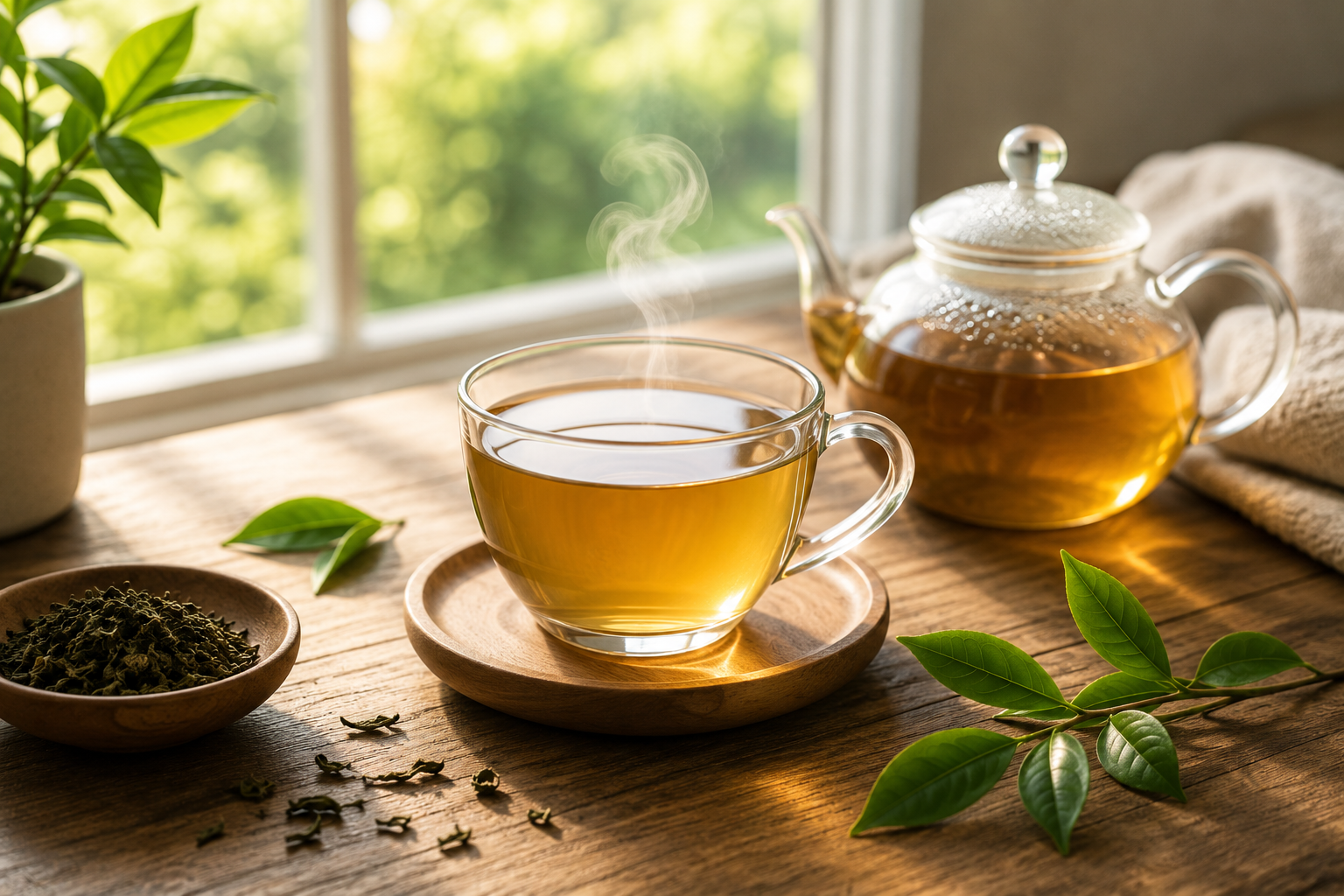
Tea is an easy drink to overlook when starting intermittent fasting. Coffee gets most of the attention, but many people eventually ask the same question about their favorite cup of tea: does tea break a fast?
For a typical intermittent fasting routine, plain unsweetened tea without calorie-containing additions can generally fit into your fasting window. The important part is what is — and isn’t — in your cup.
Green tea, black tea and many herbal teas can keep your fasting routine simple. Add sugar, honey, milk or other calorie-containing ingredients, however, and the situation changes.
Does Tea Break a Fast If You Drink It Plain?
Plain tea prepared with water and without calorie-containing additions is commonly included during fasting periods.
Johns Hopkins Medicine lists water and zero-calorie beverages such as black coffee and tea among the drinks that can be consumed while fasting. The National Institute of Diabetes and Digestive and Kidney Diseases similarly describes water and calorie-free beverages such as black coffee or tea during a time-restricted eating fasting window.
That gives us a practical rule that is much easier to follow than trying to analyze every sip:
Plain, unsweetened tea: generally fine during a typical fasting window.
Tea with calorie-containing additions: save it for your eating window.
If you are wondering about coffee as well, read Does Black Coffee Break a Fast? What You Need to Know.
Which Types of Tea Can You Drink While Fasting?
You do not need a special “fasting tea.” A simple tea made with water is usually enough.
Black tea
Plain black tea is a straightforward option during a fasting window. Drink it without sugar, honey, milk or cream if you want to keep the rule simple.
Green tea
Unsweetened green tea is another simple choice. Like black tea, the important distinction is between the tea itself and ingredients added after brewing.
Herbal tea
Many plain herbal infusions can also fit into a fasting routine, provided they do not contain added sugar or other calorie-containing ingredients.
This is one area where checking the label can be useful. Some packaged tea blends contain dried fruit, sweeteners or additional ingredients, and bottled “tea” products may be sweetened beverages rather than plain brewed tea.
What Can Make Tea Break Your Fast?
When people ask does tea break a fast, the tea itself is often not the difficult part. The additions are.
- Sugar adds carbohydrates and calories.
- Honey may feel more natural than table sugar, but it still provides sugar and energy.
- Milk contains carbohydrates, protein and calories.
- Cream adds fat and calories.
- Sweetened syrups can quickly turn tea into a calorie-containing drink.
- Sweetened bottled teas may contain substantial amounts of added sugar.
None of these ingredients are inherently “bad.” The question is simply whether you are consuming them during the period you have chosen to keep calorie-free.
Does Tea With Lemon Break a Fast?
This is where people can start turning a simple routine into a complicated chemistry experiment.
A squeeze of lemon is different from drinking plain tea because lemon contributes a small amount of energy and nutrients. Whether that matters to you depends partly on how strictly you define your fasting window and why you are fasting.
If your goal is the simplest possible rule, there is no need to debate tiny quantities every morning. Drink plain tea during the fasting window and add lemon during your eating window.
What About Tea With Artificial Sweeteners?
Zero-calorie sweeteners create a similar gray area.
Different fasting protocols use different definitions, and a zero-calorie sweetener is clearly different from adding a spoonful of sugar or honey. But beginners do not necessarily benefit from creating a complicated list of exceptions.
A simpler starting point is:
- water
- plain black coffee
- plain unsweetened tea
If you want a broader overview of fasting drinks, see What Can You Drink While Intermittent Fasting?.
Can Tea Make Intermittent Fasting Easier?
For some people, yes — although it does not need to have any special fasting powers to be useful.
A warm drink can simply make a morning routine more pleasant. Someone who normally reaches for breakfast immediately after waking may find that water followed by tea gives the morning a familiar structure while the first meal comes later.
That matters because intermittent fasting is ultimately a routine. A schedule that fits comfortably into everyday life is usually easier to repeat than one that requires constant willpower.
Tea is not a substitute for food when you genuinely need to eat, and there is no prize for forcing yourself through a fasting window that makes you feel unwell.
Tea During a 16:8 Fasting Schedule
Suppose you follow a 16:8 schedule with an eating window from noon until 8 p.m.
Your morning might look something like this:
- 7:00 a.m. — water
- 8:00 a.m. — unsweetened black or green tea
- 10:00 a.m. — water or another plain tea
- 12:00 p.m. — first meal
- 8:00 p.m. — eating window ends
There is nothing special about these exact times. Your eating window can be placed differently depending on your work, sleep, family life and preferences.
If you are new to fasting, read How to Start Intermittent Fasting: A Beginner’s Guide to Eating Windows before worrying about finding a perfect schedule.
Tea, Coffee or Water: Which Is Best While Fasting?
You do not need to choose one “best” fasting drink.
Water is the simplest option and should remain an important part of your day.
Coffee can fit into the routine if you enjoy it and tolerate caffeine well.
Tea gives you another unsweetened option and can be especially useful if you prefer a warm drink but do not want another cup of coffee.
There is no reason to force yourself to drink tea simply because you are fasting. The goal is to build a routine that is both understandable and sustainable.
Does Tea Help You Lose Weight While Fasting?
It is better not to think of tea as a shortcut to weight loss.
Intermittent fasting primarily changes when you eat. It can help some people reduce the number of opportunities they have to eat, but body-weight changes still depend on a much broader picture that includes overall energy intake, food choices, activity and other factors.
Research on time-restricted eating continues to develop. The National Institutes of Health has reported modest benefits in some studies while also emphasizing that results vary and longer-term research is still needed.
If weight loss is your main reason for fasting, read Calorie Deficit vs Intermittent Fasting: What Actually Drives Weight Loss?.
Keep Your Fasting Drinks Simple
One of the easiest ways to make intermittent fasting unnecessarily difficult is to create a different rule for every possible drink and ingredient.
Instead, decide on your basic routine before the fasting window begins.
During my fasting window: water, plain black coffee and unsweetened tea.
During my eating window: milk, sugar, honey and other calorie-containing additions if I choose to use them.
A simple rule eliminates dozens of tiny decisions.
So, Does Tea Break a Fast?
So, does tea break a fast? For a typical intermittent fasting routine, plain tea brewed with water and consumed without calorie-containing additions can generally fit into the fasting window.
The easiest distinction is not between green tea, black tea and coffee. It is between plain calorie-free drinks and drinks to which calories have been added.
Plain unsweetened tea: keep it simple.
Tea with sugar, honey, milk or cream: enjoy it during your eating window.
Intermittent fasting does not need to turn your morning into a list of complicated rules. Choose a reasonable fasting window, decide what you will drink during it, and focus on building a routine you can actually repeat.
Sources and further reading: Johns Hopkins Medicine – Intermittent Fasting; NIDDK – Intermittent Fasting and Time-Restricted Eating.
This article is for general informational purposes and is not medical advice. Intermittent fasting is not appropriate for everyone. If you have a medical condition, take medication, are pregnant or breastfeeding, have a history of disordered eating, or have concerns about fasting, discuss dietary changes with a qualified healthcare professional.