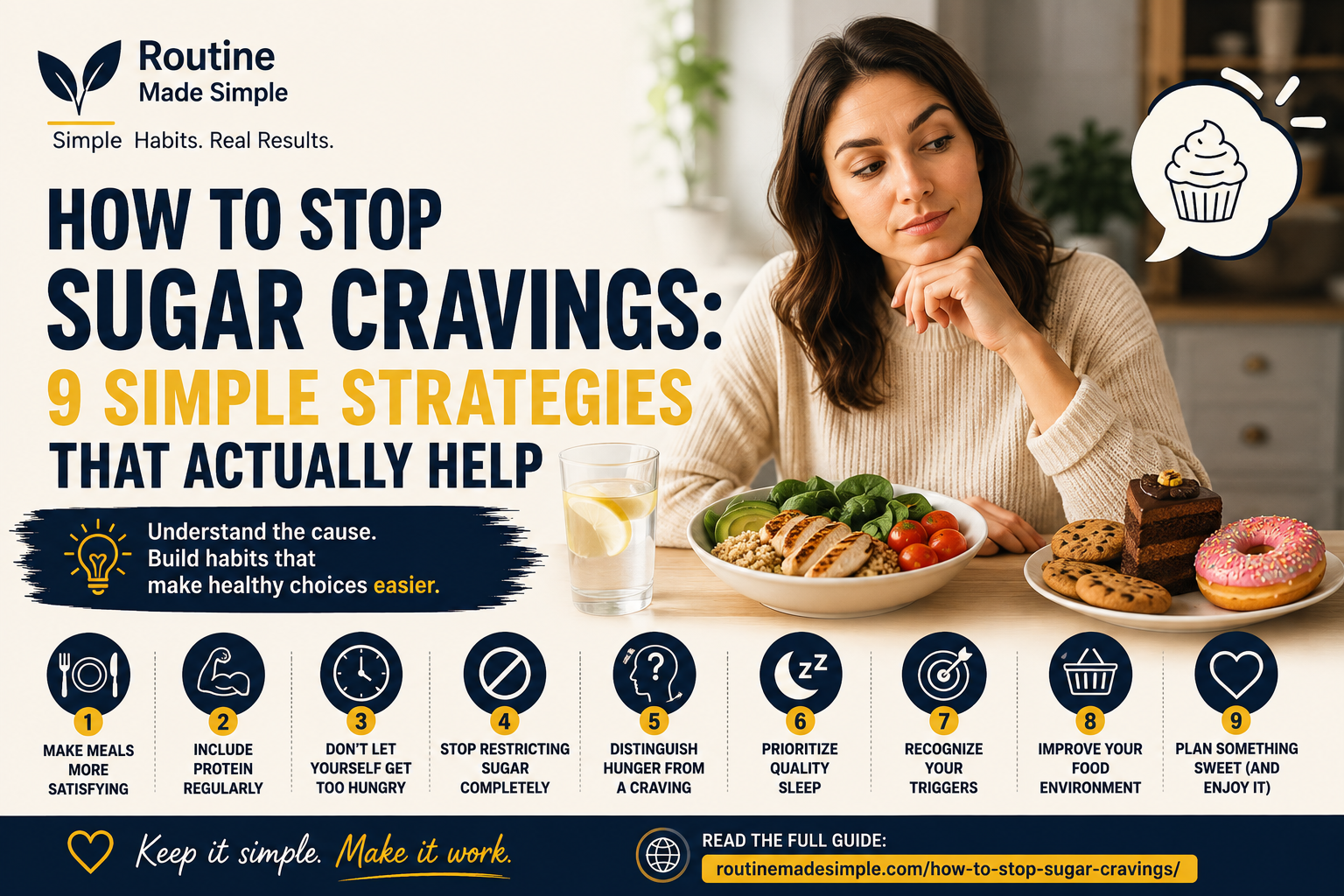
If you keep wondering how to stop sugar cravings, the answer is usually not to rely on more willpower.
Cravings can be influenced by what you ate earlier in the day, how satisfying your meals were, how well you slept, stress, habits, your environment, and even the rules you create around certain foods.
That is why simply telling yourself to “stop eating sugar” often does not work very well.
A better approach is to make cravings easier to manage before they become overwhelming.
Here are nine practical strategies that can help you build a more balanced routine without turning sugar into a forbidden food.
How to Stop Sugar Cravings: Start With the Basics
If you are trying to learn how to stop sugar cravings, begin by looking at your overall eating pattern.
Cravings do not happen in isolation.
If you regularly skip meals, eat very little protein, sleep poorly, or spend the entire day trying to be “perfect,” it may become much harder to make calm food choices later.
The goal is not to eliminate every desire for something sweet.
The goal is to reduce the situations in which that desire feels impossible to control.
1. Make Your Meals More Satisfying
One of the first things to examine is whether your meals actually keep you satisfied.
A light meal built mostly around refined carbohydrates may leave you looking for something else soon afterward.
Instead, try building meals around a few simple components:
- A useful source of protein
- Vegetables or fruit
- Fiber-rich carbohydrates
- A reasonable amount of fat
For example:
- Eggs, vegetables, whole-grain toast and fruit
- Greek yogurt, berries, oats and nuts
- Chicken, vegetables and rice
- Fish, potatoes and salad
- Beans, vegetables and whole grains
You do not need a perfect meal.
You simply want food that feels substantial enough that you are not immediately searching for something sweet afterward.
2. Include Protein Regularly
Protein can be useful when building more satisfying meals.
Examples include:
- Eggs
- Greek yogurt
- Cottage cheese
- Chicken
- Fish
- Lean meat
- Beans and lentils
- Tofu and other soy foods
A systematic review and meta-analysis of randomized trials found that higher protein intake can increase fullness and reduce short-term hunger under some conditions, although long-term effects are less clear.
You can review the research through PubMed.
This does not mean you need an extremely high-protein diet.
It simply means that including a meaningful protein source in your meals may help make those meals more satisfying.
3. Do Not Let Yourself Become Extremely Hungry
There is a big difference between choosing dessert because you enjoy it and feeling like you need to eat everything sweet in the kitchen because you have barely eaten all day.
Extreme hunger makes calm food decisions harder.
This can happen when people try to diet too aggressively or use fasting windows that do not fit their lifestyle.
If your eating pattern regularly leaves you ravenous by evening, the solution may not be to tighten the rules further.
You may need:
- A larger lunch
- A more substantial dinner
- More protein or fiber
- A planned snack
- A less aggressive fasting schedule
This connects closely with our guide on why you may feel hungry at night.
4. Stop Treating Sugar as Completely Forbidden
Strict food rules can sometimes make certain foods feel even more important.
If your rule is:
“I can never eat chocolate again.”
then chocolate may suddenly become something you think about much more often.
A more flexible approach might be:
“I can eat chocolate, but I do not need to eat it every time I think about it.”
This removes some of the urgency.
You are making a choice rather than breaking a rule.
For many people, that is easier to maintain than cycling between strict restriction and overeating.
5. Learn the Difference Between Hunger and a Craving
Physical hunger usually develops gradually.
A craving can appear quickly and often focuses on one specific food.
Try asking yourself:
“Would I eat a normal meal right now?”
If eggs, yogurt, chicken, fruit or leftovers sound appealing, you may genuinely be hungry.
If the only acceptable option is a particular cookie, chocolate bar or dessert, you may be dealing more with a craving.
This distinction is not perfect, but it can help create a useful pause.
Sometimes that pause is enough to make a more intentional choice.
6. Pay Attention to Sleep
Sleep can have a bigger impact on food choices than many people realize.
In a randomized crossover trial, restricting sleep increased subjective hunger and increased energy and carbohydrate intake from snacks compared with adequate sleep.
You can read the study on PubMed.
This does not mean that one poor night automatically causes sugar cravings.
But if you regularly sleep too little and find yourself craving highly palatable foods the next day, improving your sleep may make food decisions easier.
Instead of adding another diet rule, ask whether your evening routine gives you enough opportunity to sleep.
7. Recognize Your Craving Triggers
Cravings often appear in predictable situations.
For example:
- Watching television
- Working late
- Driving home from work
- Feeling stressed
- Finishing dinner
- Seeing snacks on the kitchen counter
The trigger may become so familiar that you reach for food without making a conscious decision.
Try changing the sequence.
After dinner, you might:
- Make unsweetened tea
- Brush your teeth
- Take a short walk
- Prepare something for tomorrow
- Move to a different room
The goal is not to distract yourself from genuine hunger.
It is to break an automatic habit.
8. Change Your Food Environment
Willpower becomes less important when your environment supports the choice you want to make.
If sweets are sitting in front of you all day, you are going to think about them more often than if they are stored away.
You do not need to remove every treat from your home.
But you can make the default choice easier.
For example:
- Keep fruit where you can see it
- Store sweets out of immediate sight
- Buy smaller portions of foods you tend to overeat
- Avoid keeping multiple open packages around
- Prepare convenient high-protein foods ahead of time
Small environmental changes can reduce the number of decisions you need to make every day.
9. Plan Something Sweet Instead of Fighting It
Sometimes you simply want dessert.
That is not automatically a problem.
You may find it easier to plan something sweet than to spend the entire evening trying not to eat it and eventually eating much more than you intended.
For example:
- Greek yogurt with berries
- Fruit with a little dark chocolate
- A small serving of your favorite dessert
- Yogurt with cocoa and fruit
The point is not that these foods are “good” and other desserts are “bad.”
The point is to make the decision intentionally rather than reactively.
Why Do Sugar Cravings Feel So Strong at Night?
If you notice that cravings are much stronger in the evening, look at what happened earlier in the day.
Common contributors include:
- Eating too little
- Low-protein meals
- Long gaps between meals
- Poor sleep
- Stress
- Habitual evening snacking
By evening, several of those factors may be happening at the same time.
That is why the solution often starts long before the craving itself appears.
How to Stop Sugar Cravings While Trying to Lose Weight
If weight loss is your goal, you do not necessarily need to eliminate sugar completely.
The bigger issue is whether your overall eating pattern creates an appropriate calorie intake that you can maintain.
Foods that contain a lot of sugar can be easy to eat in large amounts, especially when combined with fat and when portions are large.
But an occasional dessert does not automatically prevent weight loss.
A more useful approach is to focus on:
- Balanced meals
- Appropriate portions
- Protein and fiber
- Mostly minimally processed foods
- A realistic calorie intake
- Consistency over time
For more on the bigger picture, see Intermittent Fasting and Weight Loss: What Actually Works?
Do You Need to Quit Added Sugar Completely?
For most people, there is no practical reason to think in absolute terms.
A healthier eating pattern can still include foods with added sugar.
The important question is how often you eat them, how much you eat, and what the rest of your diet looks like.
If most of your meals consist of nutritious whole foods and you occasionally enjoy dessert, that is very different from getting a large portion of your daily calories from sweet drinks and highly processed snacks.
You do not need perfection.
You need a pattern you can repeat.
What About Artificial Sweeteners?
Some people use non-sugar sweeteners to reduce calorie or sugar intake.
Whether they help with cravings can vary from person to person.
If a diet drink or low-sugar product helps you comfortably reduce added sugar, it may be useful.
If sweet-tasting foods make you want more sweets, you may prefer a different approach.
There is no need to turn this into another rigid rule.
Pay attention to how your own routine works.
Should You Use Fruit When You Want Something Sweet?
Fruit can be an excellent option when you want something sweet.
Whole fruit provides carbohydrates along with water, fiber, vitamins and minerals.
Examples include:
- Berries
- Apples
- Oranges
- Bananas
- Peaches
- Grapes
Pairing fruit with yogurt, cottage cheese or nuts can create a more substantial snack if you are genuinely hungry.
Fruit does not need to be treated as equivalent to candy simply because both contain sugar.
What If the Craving Does Not Go Away?
Sometimes you can drink water, eat a balanced meal, take a walk and still want chocolate.
That is okay.
Ask yourself whether you can eat a reasonable portion intentionally and enjoy it.
If yes, that may be more sustainable than turning the food into something forbidden.
Healthy eating does not require every craving to disappear.
It requires learning how to respond to cravings in a way that fits your goals.
A Simple Sugar-Craving Routine
If you want a straightforward approach, try this:
- Ask whether you are physically hungry.
- If you are hungry, eat something satisfying.
- If you are not hungry, identify the trigger.
- Wait a few minutes before making an automatic decision.
- If you still want something sweet, choose a portion intentionally.
- Move on without turning it into a “good” or “bad” day.
This approach is deliberately simple.
There is no need to restart your diet tomorrow because you ate dessert tonight.
When Sugar Cravings Deserve More Attention
Occasional cravings are common.
But frequent episodes of feeling unable to control eating, significant distress around food, repeated binge-eating episodes, or a pattern of severe restriction followed by overeating deserve more attention.
If your relationship with food is causing distress or interfering with daily life, consider discussing it with a qualified healthcare professional or registered dietitian.
Final Thoughts on How to Stop Sugar Cravings
If you are trying to figure out how to stop sugar cravings, start by making your routine easier rather than stricter.
Eat satisfying meals. Include protein. Avoid becoming excessively hungry. Pay attention to sleep and stress. Recognize habitual triggers. Adjust your environment and allow some flexibility.
You do not have to eliminate every sweet food to build a healthier eating pattern.
The goal is not to never want sugar again. The goal is to make your response to cravings more intentional and easier to manage.
This article is for general educational purposes and is not a substitute for individualized medical or nutritional advice.