You’ve finished dinner. Your plate is empty. You know you’ve eaten a proper meal.
And yet, half an hour later, you’re standing in front of the fridge wondering what else you could eat.
Sound familiar?
It’s tempting to blame a lack of willpower, especially when you’re trying to lose weight. But feeling hungry after eating isn’t necessarily a sign that you’re doing something wrong.
Why Am I Still Hungry After Eating?
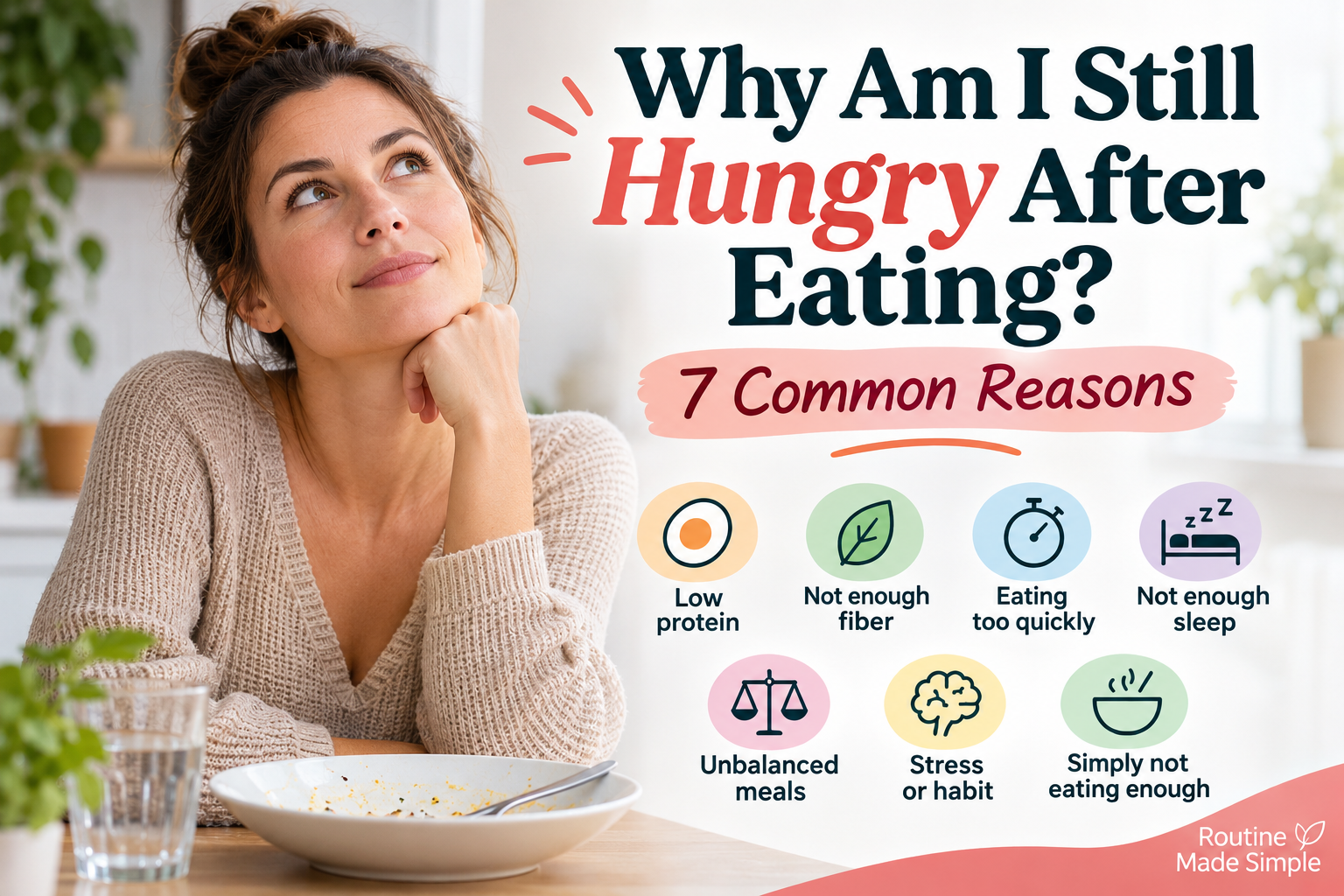
If you’re still hungry after eating, your meal may not have provided enough protein, fiber, or energy to keep you satisfied. Eating too quickly, poor sleep, stress, and habitual cravings can also contribute. Sometimes the explanation is simply that your body needs more food.
Hunger is regulated by a complex interaction between your digestive system, brain, hormones, and everyday habits. The size of your meal is only one part of the picture.
Let’s look at seven common explanations and what you can realistically do about them.
7 Reasons You May Still Feel Hungry After a Meal
1. Your Meal Was Low in Protein
Think about a breakfast of toast and jam, or a bowl of cereal that contains very little protein.
It may provide plenty of energy, but it might not keep you satisfied for very long.
Protein contributes to satiety, the feeling of fullness that develops during and after eating.
A systematic review and meta-analysis of randomized controlled trials found that higher protein intake can improve short-term fullness and reduce hunger. However, evidence about longer-term appetite effects remains less conclusive.
In other words, protein can help, but it isn’t a magic switch that turns hunger off.
Easy ways to add protein:
- Greek yogurt, cottage cheese, or eggs at breakfast
- Chicken, tuna, tofu, or beans at lunch
- Fish, lentils, or lean meat at dinner
- A combination of yogurt and fruit for a snack
You don’t need to eliminate carbohydrates. Simply consider whether your meals contain a reasonable source of protein.
Research: Protein consumption and appetite: systematic review and meta-analysis.
2. You’re Not Getting Enough Fiber
Fiber is another important part of a satisfying meal.
Foods rich in fiber often require more chewing and can add volume to your plate. Certain types of fiber also influence digestion and appetite-related signals.
Consider eating an apple versus drinking apple juice.
The whole apple provides fiber and requires chewing. For many people, that’s a more satisfying experience than drinking the equivalent calories.
A 2026 systematic review examining cereal fibers found favorable effects on several measures of satiety, particularly with some oat and rye fibers. However, improvements in feelings of fullness did not consistently translate into eating fewer calories afterward.
That’s an important distinction: feeling fuller doesn’t always mean you’ll automatically lose weight.
Good fiber sources include:
- Oats and whole grains
- Beans, lentils, and chickpeas
- Vegetables and whole fruits
- Chia seeds and flaxseeds
- Nuts and seeds
Try adding vegetables or legumes to a meal that usually leaves you hungry. Increase fiber gradually to avoid digestive discomfort.
Research: Cereal Fibers and Satiety: A Systematic Review.
3. You’re Eating Too Quickly
Lunch between meetings. Dinner in front of the television. A sandwich eaten while answering emails.
Sometimes we finish eating before we’ve really paid attention to the meal.
Fullness involves several processes, including stomach stretching, digestive signals, and communication with the brain. These signals don’t all appear at the exact moment you swallow your final bite.
Eating quickly may make it harder to notice when you’re comfortably satisfied.
That doesn’t mean you need to count every chew or turn lunch into a meditation exercise.
Try something simpler:
- Sit down for your meal.
- Put your phone aside for a few minutes.
- Pause occasionally between bites.
- Notice when you’re comfortably full rather than uncomfortably stuffed.
A small experiment: Eat one meal without scrolling, watching television, or working. See whether the experience changes how satisfied you feel.
4. You’re Not Sleeping Enough
Ever noticed how a bad night’s sleep makes snacks look unusually appealing?
There may be a biological reason.
Sleep influences appetite regulation, food choices, and energy intake.
In a randomized controlled study published in the Journal of the American College of Cardiology, researchers found that experimentally restricting sleep increased calorie consumption among the participants.
Other studies suggest that insufficient sleep can influence cravings and preferences for certain foods. However, the effects vary, and not every sleep-restriction study shows the same appetite response.
The practical lesson is simple: if you’re constantly hungry, don’t look only at your plate. Look at your sleep schedule too.
Try this: Keep a reasonably consistent bedtime and give yourself enough opportunity to sleep. Adults generally need at least seven hours per night, although individual needs vary.
Research: Effects of Experimental Sleep Restriction on Energy Intake.
5. Your Meal Wasn’t Balanced
Two meals can contain a similar number of calories and still leave you feeling very different afterward.
Imagine a quick lunch consisting of a pastry and a sweetened drink.
Now imagine a plate with chicken or lentils, vegetables, potatoes, and a little olive oil.
The second meal provides a different combination of protein, fiber, fat, food volume, and texture. It may also take longer to eat.
These characteristics can influence how satisfying the meal feels.
That doesn’t make pastries forbidden or carbohydrates bad. It simply means that the overall composition of your meal matters.
A useful formula is:
Protein + fiber-rich foods + carbohydrates + some healthy fat.
Examples:
- Eggs, whole-grain toast, and vegetables
- Greek yogurt, oats, berries, and nuts
- Chicken, potatoes, salad, and olive oil
- Lentils, rice, and roasted vegetables
If planning satisfying meals feels complicated, read our simple weekly meal planning guide.
6. Stress or Habit Is Driving Your Desire to Eat
Sometimes you don’t want another meal.
You want chocolate.
Specifically chocolate. And preferably the kind you know is hiding in the kitchen cupboard.
This can happen even when you’ve eaten enough.
Stress, emotions, environmental cues, and established habits can all influence the desire to eat.
For example, if you’ve eaten something sweet after dinner every evening for years, the end of dinner itself may become a cue.
It’s worth distinguishing between physical hunger and a specific craving.
Ask yourself:
- Would I happily eat a regular meal right now?
- Am I interested in only one particular food?
- Am I stressed, bored, or tired?
- Did my last meal genuinely satisfy me?
These questions aren’t a diagnostic test. They’re simply a way to understand your eating patterns.
And sometimes, after asking them, you’ll still want chocolate.
That’s fine. Enjoying food is part of normal life.
7. You’re Simply Not Eating Enough
This is particularly relevant if you’re trying to lose weight.
Many people respond to persistent hunger by trying to eat even less.
But if you’ve already reduced your calorie intake substantially, that may make the problem worse.
Your body needs energy. When food intake is consistently inadequate, hunger may become stronger.
Even nutritious meals can leave you hungry if their portions are too small for your needs.
This also applies to intermittent fasting.
A 16:8 schedule can help some people organize their eating habits, but it doesn’t eliminate the need for adequate nutrition.
If you’re hungry throughout the day, the solution may be to reconsider your meal size, timing, or overall energy intake rather than extending your fasting window.
For more context, see our guide to creating a calorie deficit without counting calories.
Quick Guide: Why You’re Hungry and What to Try
| Possible reason | What you might notice | What to try |
|---|---|---|
| Low protein | Meals don’t keep you satisfied | Add eggs, yogurt, beans, fish, or another protein source |
| Low fiber | Hunger returns relatively quickly | Include vegetables, oats, legumes, or whole fruit |
| Eating too fast | You finish before noticing fullness | Slow down and reduce distractions |
| Poor sleep | Stronger cravings on tired days | Review sleep duration and consistency |
| Unbalanced meals | Meals feel incomplete | Combine protein, fiber, carbohydrates, and healthy fats |
| Stress or habit | You crave specific foods after meals | Identify triggers and practice mindful choices |
| Insufficient food | Frequent or persistent physical hunger | Review total food intake and portion sizes |
These are possible explanations, not a way to diagnose the cause of persistent hunger.
How to Feel Full Longer Without Complicated Diet Rules
You probably don’t need a new meal plan with twenty instructions.
Start with a few practical adjustments.
Build More Satisfying Meals
Include a meaningful source of protein and fiber-rich foods. Choose portions that meet your needs instead of automatically selecting the smallest possible meal.
Pay Attention to Your Eating Environment
When possible, eat sitting down and give your meal some attention. You don’t need perfect mindful eating habits to benefit from fewer distractions.
Don’t Ignore Sleep and Stress
Nutrition matters, but it’s not the only factor influencing appetite. A stressful week with inadequate sleep can make an otherwise reasonable eating routine feel much harder.
Allow Flexibility
Some days you’ll be hungrier than others.
Physical activity, sleep, menstrual cycles, medication, illness, and many other factors can influence appetite.
Not every change in hunger requires a new diet rule.
Can Intermittent Fasting Help With Hunger?
Intermittent fasting can be useful for some people, but it isn’t automatically a solution to persistent hunger.
Some find that a consistent eating window reduces unplanned snacking and simplifies their day. Others feel more hungry when meals are restricted to a shorter period.
Both experiences are possible.
If you use a 16:8 schedule, focus on getting enough nutrients and energy during your eating window.
Don’t assume that a longer fast is always better.
Our guide to 12, 14, 16, and 18-hour fasting windows explains the differences and why flexibility matters.
Fasting isn’t suitable for everyone. People who are pregnant, breastfeeding, have a history of eating disorders, or use medication affected by meal timing should seek appropriate professional guidance.
Can a Structured Wellness Routine Make Things Easier?
Knowing what to eat is one thing. Following a routine consistently is another.
For some people, a simple daily structure makes healthy habits easier to repeat.
That’s one reason routines involving consistent meal times, balanced food choices, and optional time-restricted eating attract interest.
One example is Unicity Feel Great, a wellness routine combining Unimate, Balance, and time-based eating.
Unimate is a yerba mate-based drink, while Balance is a fiber-based product used around meals according to its label directions.
Neither product replaces balanced nutrition, and the Feel Great combination should not be presented as a proven treatment for persistent hunger or a guaranteed weight-loss solution.
If you’d like to understand how the products fit into a practical daily schedule, what they contain, and what to consider before using them, we’ve prepared a separate guide.
Explore the Feel Great routine and how it works.
Affiliate disclosure: Routine Made Simple may earn a commission from qualifying purchases through affiliate links, at no additional cost to you. Product experiences and results vary.
Frequently Asked Questions About Hunger After Eating
Why am I still hungry after eating a big meal?
A large meal doesn’t always provide lasting satisfaction. Meal composition, eating speed, sleep, stress, and overall energy intake can influence hunger. Persistent or unusually intense hunger may also have medical causes.
Why am I hungry again 30 minutes after eating?
You may not have eaten enough, your meal may have lacked satisfying nutrients, or you may be experiencing a craving rather than physical hunger. There isn’t one explanation that applies to everyone.
Why do I never feel full no matter how much I eat?
Persistent difficulty feeling full can be related to dietary patterns, appetite regulation, medication effects, or medical conditions. If this happens regularly or is accompanied by other symptoms, consult a healthcare professional.
What foods keep you full the longest?
Meals combining protein, fiber-rich foods, and appropriate portions often support satiety. Examples include eggs with whole-grain toast, Greek yogurt with oats, lentils with vegetables, or fish with potatoes and salad.
Can blood sugar changes make me hungry after eating?
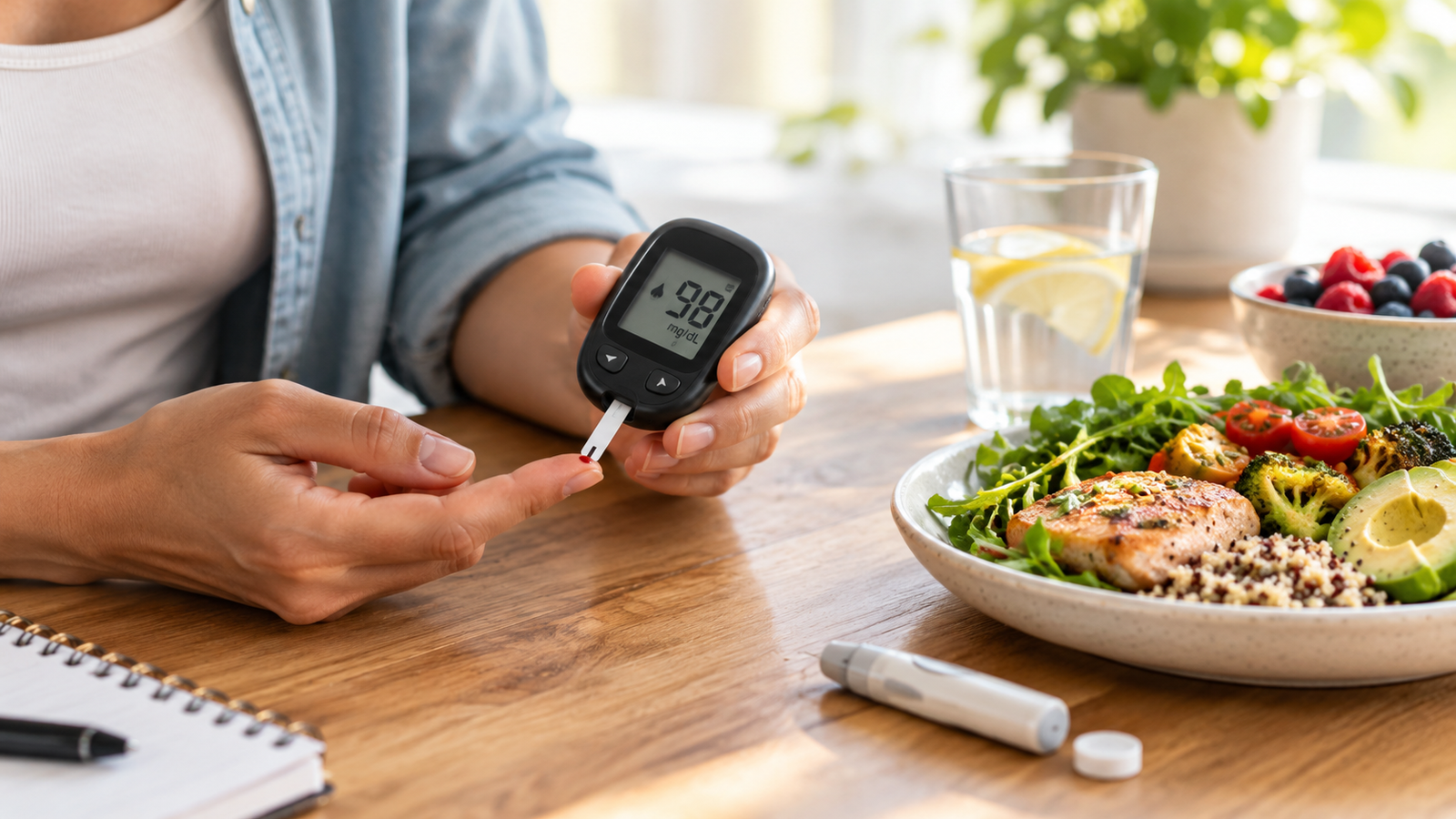
Blood glucose changes can influence how some people feel after meals, but hunger alone doesn’t establish a blood sugar problem. If you experience repeated shakiness, sweating, dizziness, or other concerning symptoms, seek medical advice.
Does drinking water stop hunger?
Water supports normal hydration, but it isn’t a replacement for food. If you’re genuinely hungry because you haven’t eaten enough, drinking more water won’t address the underlying energy or nutrient needs.
Should I ignore hunger when trying to lose weight?
No. Some hunger can occur during a calorie deficit, but persistent intense hunger may suggest that your eating plan is too restrictive. A sustainable approach should provide adequate nutrition and be manageable over time.
When Is Hunger After Eating a Reason to See a Doctor?
Occasional hunger after a meal is common.
However, unusually intense or persistent hunger should be evaluated, especially if it occurs with:
- Excessive thirst or frequent urination
- Unexplained weight loss
- Repeated shakiness, sweating, or dizziness
- Marked fatigue or other new symptoms
- A recent change in medication or appetite
Medical conditions and medications can affect appetite, so don’t assume that every hunger problem is caused by your diet.
The Bottom Line
If you’re still hungry after eating, start by looking at the basics.
Did your meal contain enough protein and fiber? Did you eat enough overall? Were you distracted? Have you been sleeping well?
Sometimes a few small changes make meals more satisfying.
Other times, your body is simply asking for more food.
The goal isn’t to eliminate hunger completely. Hunger is a normal biological signal.
The goal is to understand it better and build eating habits that support your health without making every meal complicated.
That’s what Routine Made Simple is all about.
What usually makes you hungry again after eating: a rushed meal, a stressful day, or something else?
Medical disclaimer: This article provides general educational information and is not a substitute for personalized medical advice, diagnosis, or treatment.