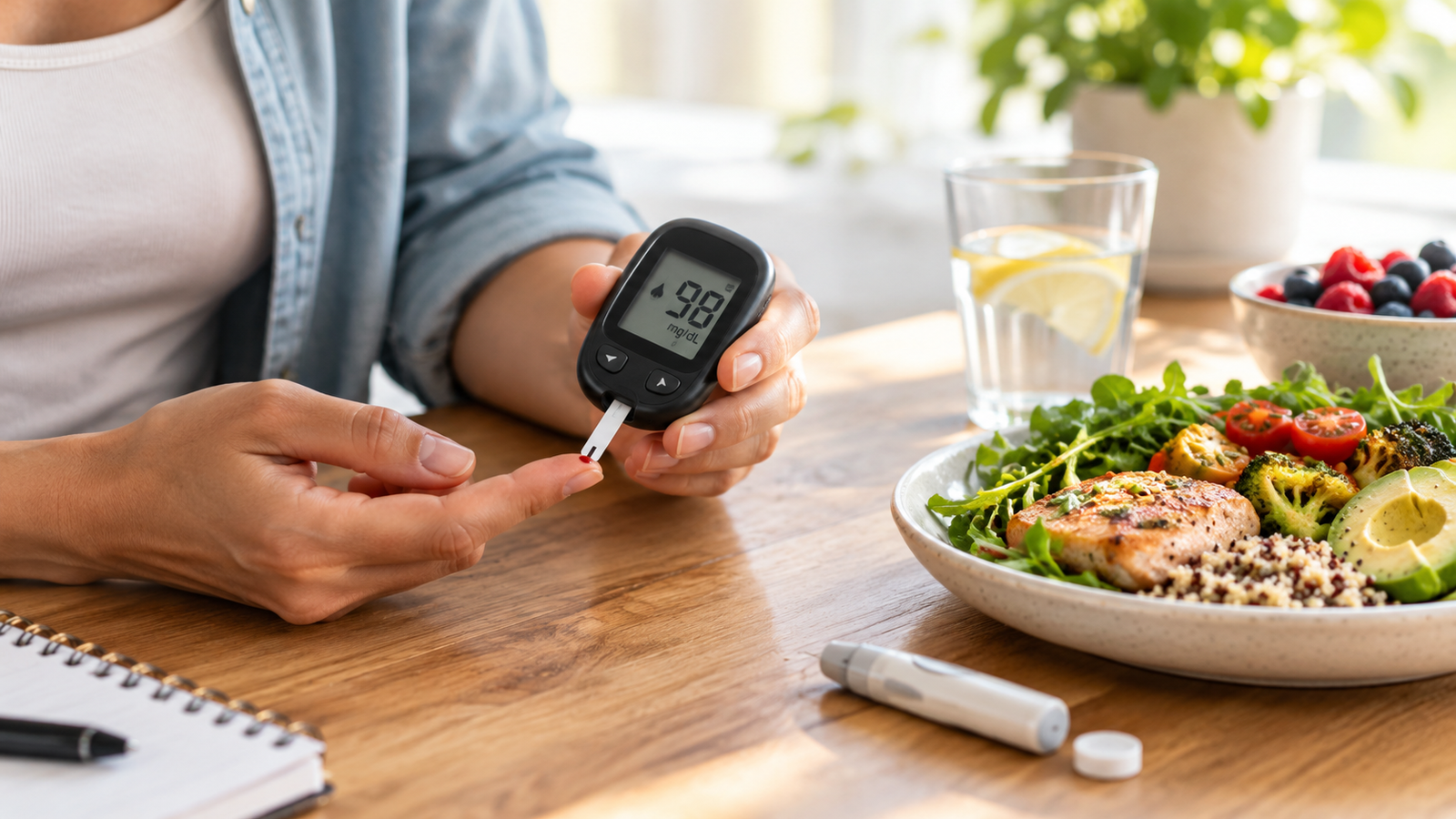
Ever finish lunch feeling perfectly fine, only to find yourself sleepy or reaching for a snack an hour later? It’s tempting to blame a “blood sugar spike.” But what actually happens to blood sugar after eating—and is every rise something to worry about?
Here’s the simple version: your blood sugar is supposed to rise after a meal. Your body then works to move glucose from your bloodstream into cells where it can be used or stored. The interesting part is how different meals, activities, and individual factors influence that process.
What Happens to Blood Sugar After Eating? The Short Answer
After a meal containing carbohydrates, digestion releases glucose into your bloodstream. Blood sugar rises, and your pancreas releases insulin to help your body use and store glucose. For many people without diabetes, glucose then moves back toward its usual range over the next few hours. The size and timing of that rise depend on the meal, activity, medications, and individual metabolism. A temporary rise is normal; one reading alone does not diagnose a health problem. Source: CDC.
Blood Sugar After Eating: What Happens Step by Step?
Imagine eating a sandwich, an apple, or a bowl of rice. Your digestive system breaks down digestible carbohydrates into simpler sugars, including glucose. Glucose enters your bloodstream, so your blood sugar level begins to rise. This is the normal starting point of the blood sugar after eating response.
Your pancreas responds by releasing insulin, a hormone that helps your muscles, fat tissue, and other cells take up or use glucose. Your liver also helps manage the supply of glucose in your blood. As glucose is used and stored, blood sugar generally moves back toward its usual level.
It’s a normal, carefully regulated process—not a sign that you ate something “bad.” For more on insulin and glucose regulation, see the NIDDK explanation of diabetes and insulin.
- You eat: Your digestive system processes the meal.
- Glucose enters the blood: Blood sugar usually increases, especially after carbohydrate-containing foods.
- Insulin responds: Your body helps move glucose into cells and regulate its availability.
- Levels settle: Blood sugar typically declines as the meal is processed and glucose is used or stored.
At a glance: the stages after a meal
| Stage | What happens |
|---|---|
| Digestion begins | Digestible carbohydrates are broken down and glucose starts entering the bloodstream. |
| Glucose and insulin respond | Blood glucose may rise, while insulin helps regulate how glucose is used and stored. |
| Over the following hours | Glucose is used or stored, and levels generally move back toward their usual range. |
| Between meals | The body continues regulating glucose, including through the liver. |
These are stages, not fixed time intervals. Individual responses vary.
How Long Does Blood Sugar After Eating Stay Elevated?
There isn’t one timetable that fits everyone. The pattern of blood sugar after eating can change from one meal to the next. Blood sugar often begins rising within the first hour after a meal, but the timing and size of the increase depend on what you ate, how much you ate, your activity level, medications, and your individual glucose regulation.
For many people without diabetes, glucose moves back toward their usual range within a few hours. But a reading at one specific moment can’t tell the whole story.
If you have diabetes, your care team may recommend checking glucose at a particular time after the start of a meal. Those targets are individual; don’t apply someone else’s number to yourself.
Why do some meals cause a bigger blood sugar rise?
To understand blood sugar after eating, think about the difference between drinking a sugary soda and eating a meal that includes beans, vegetables, eggs, and whole grains. Both may contain carbohydrates, but your body processes them differently.
1. The amount and type of carbohydrate
Carbohydrate quantity matters. The American Diabetes Association explains how carbohydrates affect blood glucose. Refined starches and sugary drinks can be digested relatively quickly, while less processed, fiber-rich foods may produce a more gradual response. That doesn’t mean you must avoid bread, pasta, or fruit; portions and the rest of the meal matter too.
2. Fiber
Fiber, especially certain types of soluble fiber, can slow digestion and the absorption of carbohydrates. The American Diabetes Association’s carbohydrate guidance provides additional context. Oats, beans, lentils, berries, and many vegetables are practical places to start. If you’re looking for easy ideas, see our guide on how to get enough fiber every day.
3. Protein and fat
Adding protein or fat to a carbohydrate-containing meal can change how quickly food leaves the stomach and how glucose appears in the blood. This doesn’t automatically make any meal “healthy,” but it helps explain why a mixed meal behaves differently from a sugary drink.
4. Portion size
A large serving of a carbohydrate-rich food may create a larger glucose response than a smaller serving. You don’t need to weigh everything: our simple portion-size guide offers practical ways to build awareness without obsessing over numbers.
5. Sleep, stress, activity, and personal differences
Sleep quality, stress hormones, physical activity, insulin sensitivity, and certain medications can affect glucose levels. Two people can eat the same meal and have different responses—and the same person may respond differently on different days.
Are blood sugar spikes always bad?
No. A rise after eating is normal physiology. Social media sometimes makes it sound as though a flat glucose line is the goal for everyone. It isn’t.
There is a meaningful difference between a normal temporary rise and persistently elevated blood glucose, which can be a concern in diabetes and other metabolic conditions. One meal—or one wearable-device graph—does not diagnose a problem.
If you have frequent symptoms, a personal or family history of diabetes, or questions about your glucose levels, ask a qualified healthcare professional whether testing such as fasting glucose or HbA1c is appropriate.
Five everyday habits that can support a healthier glucose response
1. Build a balanced plate
Start with vegetables, include a source of protein, and add a portion of carbohydrate that suits your needs. There’s no need to turn every meal into a math problem. Our balanced plate guide can help you get started.
2. Choose fiber-rich carbohydrates more often
Try oats instead of a sugary breakfast cereal, beans as part of lunch, or whole fruit instead of juice. Small swaps can make a routine easier to maintain.
3. Take a short walk after eating
Muscles use glucose for energy, and gentle movement after a meal can help moderate blood sugar after eating. You don’t need an intense workout; even a comfortable walk can be a useful habit. For more ideas, see our walking guide.
4. Make sleep and consistency part of the plan
Irregular sleep and chronic stress can complicate glucose regulation. Rather than chasing a perfect meal, focus on habits you can repeat. Here’s our guide to building a healthier evening routine.
5. Pay attention to the bigger picture
Look at your overall eating pattern, energy, activity, and medical context—not a single food or number. If you have diabetes or take glucose-lowering medication, make changes with your healthcare team, especially if they involve meal timing or fasting.
What about intermittent fasting and blood sugar?
Intermittent fasting changes when you eat, which can affect your daily glucose patterns. Some studies suggest benefits for certain people, but results vary, and fasting is not automatically better than a sustainable, balanced eating routine.
More importantly, fasting may not be appropriate for everyone. People who use insulin or certain diabetes medications can be at risk of low blood sugar when meals are delayed or skipped. If that applies to you, speak with your healthcare team before changing your eating window.
If you’re curious about the basics, start with our beginner’s guide to intermittent fasting rather than jumping into a strict schedule.
Where does the Feel Great routine fit in?
Some readers also ask about Unicity Feel Great, a commercial routine that combines an eating window with two products, Unimate and Balance. Balance is marketed as a fiber-containing drink mix intended for use around meals, while Unimate is a yerba mate–based beverage.
It’s important to separate the general evidence for fiber, movement, and balanced meals from claims about a specific supplement. Research on a particular product may be limited and should not be treated as proof that it prevents or treats diabetes. Supplements are not substitutes for prescribed medication or individualized medical care.
If you want to understand the products, their suggested use, and their limitations, read our review of the Feel Great research or explore our Feel Great overview.
Disclosure: Routine Made Simple may earn a commission from qualifying purchases through some Feel Great links, at no additional cost to you. Our educational content is not medical advice.
Frequently asked questions
Is it normal for blood sugar to rise after eating?
Yes. Blood glucose normally rises as your body digests and absorbs carbohydrates. The amount and duration vary from person to person and meal to meal.
Does fruit cause blood sugar spikes?
Fruit contains natural sugars, but whole fruit also provides water, fiber, and nutrients. Portion size and the type of fruit affect the response. For most people, whole fruit can fit comfortably into a balanced eating pattern.
Can I feel a blood sugar spike?
Feeling sleepy or hungry after a meal doesn’t prove that your glucose rose unusually high or fell too low. Symptoms are nonspecific. If you repeatedly experience shaking, sweating, confusion, excessive thirst, or frequent urination, seek medical advice rather than guessing.
Should everyone use a continuous glucose monitor?
No. Continuous glucose monitors are valuable tools for many people with diabetes, but routine use by people without diabetes is not established as necessary for healthy eating. Readings require context and can lead to unnecessary worry when interpreted without clinical guidance.
Is walking after meals worth trying?
Yes, if it’s safe and practical for you. A short, easy walk after a meal is a simple habit that can support glucose management and general activity.
The bottom line
A rise in blood sugar after eating is part of how a healthy body works. You don’t need to fear every carbohydrate or chase a perfectly flat glucose graph.
Start with the habits that are easiest to repeat: balanced meals, more fiber-rich foods, a little movement, and enough sleep. That’s a far more useful starting point than trying to control every tiny fluctuation.
What’s one small change you could make to your next meal? Sometimes the simplest routine is the one that lasts.
About this article and our sources
This guide is written for general education. It draws on public patient-education resources from the Centers for Disease Control and Prevention (CDC), the National Institute of Diabetes and Digestive and Kidney Diseases (NIDDK), and the American Diabetes Association (ADA). The links beside relevant explanations let you check the underlying guidance directly. It is not a personalized assessment of blood glucose or a substitute for professional care.
Editorial transparency: Routine Made Simple publishes practical wellness education and also has a commercial relationship with some Feel Great products, disclosed above. A qualified medical review is not claimed for this article. The author name and publication/update dates should be displayed using the real WordPress post metadata, not invented in the article body.
Further reading
Medical note: This article is for general education and is not a diagnosis or treatment recommendation. Individual glucose targets and medication decisions belong with your healthcare team.