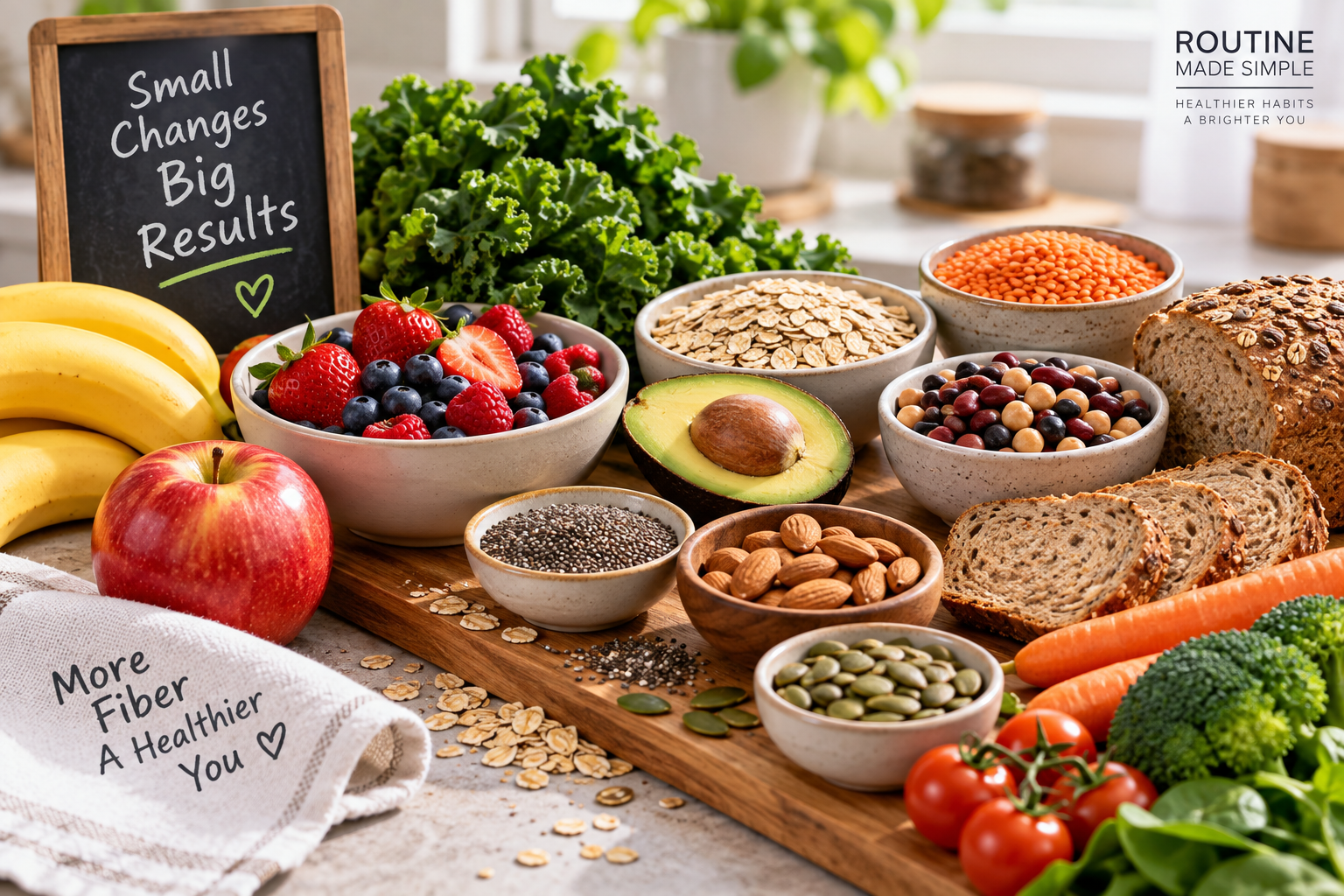
If you’re trying to improve your diet, manage hunger, or make weight loss feel easier, fiber is one of the simplest places to start.
The problem is that many people know fiber is important but still aren’t sure how to get enough fiber without completely changing the way they eat.
The good news is that you usually don’t need a complicated meal plan. Small changes—like adding beans to a meal, choosing whole grains, or keeping fruit and seeds on hand—can make a noticeable difference over the course of the day.
In this guide, we’ll look at why fiber matters, how much you may need, and 10 realistic ways to eat more fiber every day.
What Is Dietary Fiber?
Dietary fiber is the part of plant foods that your body does not fully digest or absorb.
Unlike sugars and starches, fiber passes through much of the digestive system relatively intact. It is found naturally in foods such as:
- vegetables
- fruit
- beans and lentils
- whole grains
- nuts
- seeds
There are two broad types of fiber: soluble fiber, which can dissolve in water and form a gel-like substance, and insoluble fiber, which helps add bulk to stool and supports normal digestion.
Most whole plant foods contain a mixture of both types, which is one reason variety matters.
How Much Fiber Do You Need?
A useful general target is around 14 grams of fiber per 1,000 calories eaten. On a 2,000-calorie diet, the FDA Daily Value for fiber is 28 grams per day.
According to the U.S. Food and Drug Administration, 28 grams is the Daily Value used for fiber on a standard 2,000-calorie diet.
Individual needs can vary based on age, sex, calorie intake, health status, and overall diet.
If you’re trying to figure out how to get enough fiber, the easiest approach is usually to spread fiber-rich foods across several meals instead of trying to get most of it at once.
Instead of obsessing over an exact number every day, it can be more useful to focus on consistently including fiber-rich foods at most meals.
Why Fiber Matters
Fiber is often associated with digestion, but its role goes beyond simply keeping you regular.
A diet rich in fiber can help support:
- normal bowel function
- greater meal satisfaction
- healthy cholesterol levels
- more gradual digestion of carbohydrates
- better overall diet quality
High-fiber foods also tend to be relatively filling for their calorie content, which can make them useful if you’re trying to manage portions or lose weight.
If weight loss is one of your goals, you may also find our guide on how to create a calorie deficit without counting calories helpful.
How to Get Enough Fiber: 10 Simple Strategies
1. Add Fruit to Breakfast
One of the easiest ways to increase fiber is to add a piece of fruit to a meal you already eat.
Good options include:
- berries
- apples
- pears
- oranges
- bananas
Whenever practical, eat the whole fruit rather than drinking fruit juice. Whole fruit retains more of its natural fiber.
2. Choose Whole Grains More Often
Refined grains usually contain less fiber because part of the grain has been removed during processing.
Simple swaps include:
- whole-grain bread instead of white bread
- brown rice instead of white rice
- oats instead of low-fiber breakfast cereals
- whole-wheat pasta instead of regular pasta
You don’t need to replace everything at once. Even one or two swaps a day can add up.
3. Eat Beans or Lentils Several Times a Week
Beans, chickpeas, peas, and lentils are some of the most practical high-fiber foods.
They’re also versatile. You can add them to:
- soups
- salads
- chili
- rice dishes
- wraps
- pasta sauces
If you don’t eat legumes often, start with smaller portions and increase gradually.
4. Add Vegetables to Meals You Already Eat
You don’t need to live on salads to eat more vegetables.
Try adding vegetables to foods you already enjoy:
- spinach or peppers in eggs
- vegetables in pasta sauce
- extra vegetables in sandwiches or wraps
- frozen vegetables alongside dinner
- vegetables in soups and stews
Frozen vegetables count too and can be especially useful when convenience matters.
5. Keep Nuts and Seeds Available
Nuts and seeds can add fiber, healthy fats, and texture to meals.
Examples include:
- almonds
- walnuts
- chia seeds
- flaxseed
- pumpkin seeds
- sunflower seeds
You can sprinkle seeds over yogurt, oatmeal, or salads, or use a small portion of nuts as a snack.
6. Build Meals Around Protein + Plants
A simple way to improve meal quality is to combine a protein source with one or more fiber-rich plant foods.
For example:
- chicken + roasted vegetables + potatoes
- eggs + whole-grain toast + fruit
- Greek yogurt + berries + chia seeds
- fish + brown rice + vegetables
- lentils + vegetables + rice
This approach can also make meals more satisfying.
If you’re working on your protein intake too, see how to eat more protein without overcomplicating your diet.
7. Read the Nutrition Label
Two foods that look similar can contain very different amounts of fiber.
When comparing bread, cereal, wraps, or snack foods, check the Nutrition Facts label.
As a general guide, the FDA considers 5% Daily Value or less of a nutrient per serving to be low and 20% Daily Value or more to be high.
That makes the fiber line on the label a quick way to compare similar products.
8. Don’t Forget Potatoes
Potatoes often get unfairly excluded from healthy eating discussions.
A potato—especially with the skin—can contribute useful fiber along with potassium and other nutrients.
The preparation method matters more than the fact that it’s a potato. Baked or boiled potatoes can fit easily into a balanced meal.
9. Increase Fiber Gradually
Going from a low-fiber diet to a very high-fiber diet overnight can lead to bloating, gas, or digestive discomfort.
One of the most common mistakes when learning how to get enough fiber is increasing intake too quickly.
A better strategy is to increase fiber gradually over several days or weeks.
For example, you might start by adding fruit at breakfast, then vegetables at lunch, and later introduce more beans or whole grains.
10. Drink Enough Water
Fiber works best when your overall fluid intake is adequate.
This becomes especially important as you increase your intake of whole grains, legumes, seeds, and other fiber-rich foods.
The Mayo Clinic also recommends increasing fiber gradually and drinking enough fluids as your intake rises.
If hydration is something you’re working on too, read our guide on how much water you should drink each day.
A Simple High-Fiber Day
You don’t need unusual foods or complicated recipes to build a fiber-rich day.
For example:
- Breakfast: oatmeal with berries and chia seeds
- Lunch: chicken wrap with whole-grain tortilla, beans, and vegetables
- Snack: apple and a small handful of almonds
- Dinner: salmon, potatoes with skin, and roasted vegetables
The exact foods don’t matter as much as the overall pattern.
Can Fiber Help With Weight Loss?
Fiber itself is not a weight-loss shortcut, but high-fiber foods can make a calorie-controlled diet easier to follow.
Fiber-rich foods often take longer to eat and tend to be more filling than highly processed, low-fiber foods.
That can help reduce the feeling that you’re constantly hungry while trying to eat less.
This is similar to the role protein can play in a balanced diet: neither nutrient magically causes fat loss, but both can help make a sustainable calorie deficit easier to maintain.
What About Fiber Supplements?
Whole foods should usually form the foundation of your fiber intake because they also provide vitamins, minerals, and other beneficial plant compounds.
However, some people find a fiber supplement useful when their normal diet consistently falls short.
If you already follow the Feel Great routine, this is also where Balance fits into the bigger picture. Balance contains fiber and is used before meals as part of the routine. It can be a convenient addition, but it should complement—not replace—a diet built around vegetables, fruit, whole grains, legumes, nuts, and seeds.
You can learn more about how the two products serve different roles in our guide to Unimate and Balance.
Common Mistakes When Trying to Eat More Fiber
Increasing fiber sounds simple, but a few mistakes can make the process harder than it needs to be.
- Increasing too quickly: sudden large increases may cause digestive discomfort.
- Ignoring fluids: adequate hydration becomes more important as fiber intake rises.
- Relying only on supplements: whole foods provide more than fiber alone.
- Assuming “whole grain” always means high fiber: check the Nutrition Facts label.
- Trying to perfect every meal: consistency matters more than perfection.
Once you understand how to get enough fiber, the process becomes much less complicated than it first appears.
The Bottom Line
If you’re wondering how to get enough fiber, start with your normal meals rather than trying to redesign your entire diet.
Add fruit to breakfast. Include vegetables at lunch and dinner. Choose whole grains more often. Eat beans, nuts, and seeds regularly. Increase your intake gradually and drink enough water.
Those small habits can make it much easier to reach a useful daily fiber intake without turning healthy eating into another complicated project.
Simple routines are usually the ones that last.