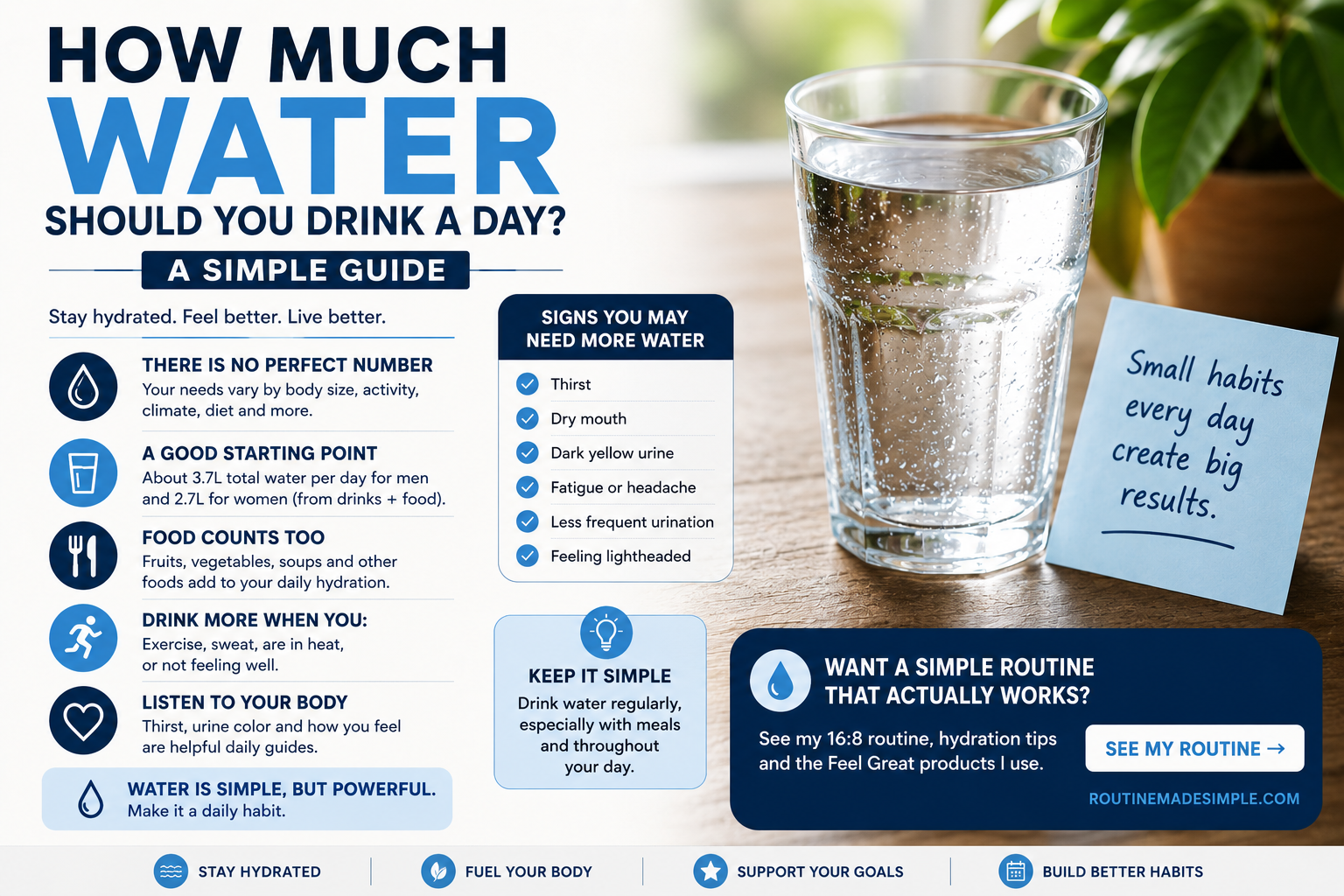
How much water should you drink a day? The honest answer is that there is no single number that is perfect for everyone.
Your hydration needs depend on your body size, activity level, climate, diet, pregnancy or breastfeeding, medications, health conditions and even how much water-rich food you eat.
That is why rules such as “everyone needs exactly eight glasses of water” are easy to remember but not especially precise.
A better approach is to understand a useful starting point, recognize the situations that increase your needs and build simple hydration habits you can actually maintain.
How Much Water Should You Drink a Day? The Short Answer
The National Academies established an Adequate Intake for total water of about:
- 3.7 liters per day for adult men
- 2.7 liters per day for adult women
But there is an important detail: these numbers refer to total water from all beverages and food, not just glasses of plain water.
In the data used to establish those reference values, roughly 80% of total water came from beverages and about 20% came from food.
So you do not need to force yourself to drink 3.7 liters of plain water simply because you are a man, or 2.7 liters simply because you are a woman.
These are useful reference points — not rigid daily targets for every person.
💧 Hydration is one of the simplest parts of my own routine.
I keep my day fairly simple: a consistent 16:8 eating schedule, plenty of water, Unimate in the morning and Balance before my two main meals.
I’ve put the complete routine on one page so you can see exactly how I structure it.
Why There Is No Perfect Water Number
The amount of water you need can change from one day to the next.
For example, you may need more fluids when you:
- exercise,
- spend time in hot or humid weather,
- sweat heavily,
- have a fever, vomiting or diarrhea,
- are pregnant or breastfeeding,
- eat a particularly salty diet,
- or spend long periods outdoors.
A person sitting in an air-conditioned office all day does not necessarily have the same hydration needs as someone working outside in summer heat.
That is why thirst and normal daily habits still matter.
The National Academies notes that most healthy people can generally meet their hydration needs by allowing thirst to guide fluid intake while regularly consuming beverages with meals.
Does Food Count Toward Your Water Intake?
Yes.
This is one of the reasons daily water recommendations are often misunderstood.
Water does not only come from a bottle or glass.
Many foods contain substantial amounts of water, particularly:
- watermelon,
- oranges,
- berries,
- cucumbers,
- tomatoes,
- lettuce,
- soups,
- yogurt,
- and many other fruits and vegetables.
If you eat plenty of water-rich foods, some of your daily hydration is already coming from your meals.
Do Coffee and Tea Count as Hydration?
Yes, coffee and tea still contribute fluid.
Caffeine can have a mild diuretic effect, especially in people who are not accustomed to it, but moderate caffeinated beverages still provide water.
The idea that every cup of coffee automatically dehydrates you more than the fluid it provides is too simplistic.
That does not mean coffee should replace all of your water.
It simply means beverages such as coffee and tea still contribute to total fluid intake.
If you are also interested in fasting, see:
What About Yerba Mate?
Plain yerba mate is another mostly water-based beverage and therefore contributes fluid.
It also naturally contains caffeine, so your total caffeine intake still matters.
If you are interested in yerba mate, our full guide explains yerba mate benefits, caffeine, focus and what the research actually says.
We will also cover the fasting question separately in our upcoming guide: Does Yerba Mate Break a Fast?
How Much Water Should You Drink While Intermittent Fasting?
Intermittent fasting does not mean avoiding water.
In fact, water is the simplest beverage during a fasting window.
Some people notice that they accidentally drink less when they start fasting because they previously associated drinking with meals.
That can make fasting feel harder than it needs to be.
During a fast, you can build hydration into your routine by drinking water regularly rather than waiting until you become extremely thirsty.
If you want more fasting beverage options, read What Can You Drink While Intermittent Fasting?
Can Drinking Water Help With Hunger While Fasting?
Sometimes thirst and hunger can occur at the same time, and having some water may help you better understand what you are actually feeling.
But water is not a substitute for food when you are genuinely hungry.
The goal should not be to use huge amounts of water to suppress normal hunger.
If you are repeatedly extremely hungry during your fasting window, the bigger issue may be your meal quality, calorie intake or fasting schedule.
See our guide on why you may feel hungry at night if evening hunger is a recurring problem.
Signs You May Need More Water
There is no single symptom that perfectly measures hydration, but some common signs that you may need more fluids include:
- thirst,
- dry mouth,
- darker urine,
- less frequent urination,
- headache,
- fatigue,
- or feeling lightheaded.
These symptoms can also have other causes, so they should not automatically be blamed on dehydration.
But if you realize you have barely had anything to drink all day, hydration is an obvious place to start.
Is Urine Color a Good Hydration Guide?
Urine color can provide a rough clue, but it is not a perfect diagnostic tool.
Very dark urine can occur when urine is concentrated, while very pale urine often reflects greater fluid intake.
However, vitamins, medications, foods and medical conditions can also affect urine color.
So think of urine color as one practical clue rather than a precise hydration test.
Do You Need Eight Glasses of Water a Day?
The “eight glasses a day” rule is popular because it is simple.
But it should not be treated as a universal scientific requirement.
Eight 8-ounce glasses equal about 1.9 liters of water.
That may be enough for some people when combined with other beverages and water from food.
For others — especially people who are larger, physically active or exposed to heat — it may not be enough.
Instead of obsessing over exactly eight glasses, use it as a reminder to drink regularly if that helps you build the habit.
Should You Drink a Gallon of Water a Day?
A gallon is about 3.8 liters.
Some people naturally need that much total fluid or more, particularly with heavy physical activity or hot conditions.
But there is no general reason every adult needs to force down a gallon of plain water every day.
Drinking much more water than you need does not automatically make you healthier.
Can You Drink Too Much Water?
Yes.
Although dehydration gets more attention, excessive water intake can also be dangerous.
Drinking very large amounts of water in a short period can dilute sodium levels in the blood, a condition called hyponatremia.
This is unusual in normal daily life but can occur in endurance sports, extreme water-drinking challenges or situations where someone repeatedly drinks far beyond thirst.
The practical lesson is simple:
More water is not always better.
Water and Exercise
Exercise increases fluid losses through sweat.
How much you lose depends on:
- exercise intensity,
- duration,
- temperature and humidity,
- clothing,
- body size,
- and your individual sweat rate.
Short, light workouts may not require a complicated hydration strategy.
Long-duration exercise, intense training or heavy sweating can require more attention to fluids and sometimes electrolytes.
If you regularly train for long periods in heat, a personalized hydration strategy may be more appropriate than following a generic daily water target.
Do You Need Electrolytes Every Day?
Most people eating a normal varied diet do not need an electrolyte drink every time they drink water.
Electrolyte replacement becomes more relevant when fluid and electrolyte losses are higher, such as:
- long-duration exercise,
- heavy sweating,
- very hot conditions,
- or certain illnesses involving vomiting or diarrhea.
Many commercial electrolyte drinks also contain sugar and calories, so check the label if you are using one during a fasting period.
How Much Water Should You Drink in Hot Weather?
Your water needs generally increase when temperatures rise because your body loses more fluid through sweating.
This is particularly important when heat is combined with physical activity.
Do not wait until you feel severely thirsty during prolonged outdoor activity in hot weather.
Drink regularly, take breaks when possible and pay attention to symptoms of heat illness.
Older adults, pregnant people, young children and people with certain health conditions may be especially vulnerable to heat and dehydration.
Water During Pregnancy and Breastfeeding
Fluid needs can increase during pregnancy and breastfeeding.
Pregnancy also increases vulnerability to dehydration during hot weather because the body has to work harder to regulate temperature.
If you are pregnant or breastfeeding, hydration needs are best considered together with your overall nutrition and medical care rather than using a generic internet formula.
Does Sparkling Water Count?
Yes.
Plain sparkling water contributes to hydration just like still water.
If carbonation makes water more enjoyable for you, it can be an easy way to increase fluid intake.
The main thing to check is what has been added.
Plain sparkling water is very different from a carbonated drink containing sugar and calories.
Does Diet Soda Count Toward Hydration?
A diet soda is still mostly water and contributes fluid.
However, that does not mean it needs to become your primary hydration source.
If you are fasting, there is also a separate question about artificial sweeteners, hunger, fasting goals and clean fasting.
We cover that in detail here: Does Diet Soda Break a Fast?
How to Drink More Water Without Tracking Every Ounce
You do not need a spreadsheet to stay hydrated.
A few simple habits can do most of the work.
- Drink some water after waking up.
- Keep water somewhere visible.
- Drink with your meals.
- Carry water when you will be away from home for several hours.
- Drink more when you are active or spending time in heat.
- Choose water before automatically reaching for a sugary drink.
If you naturally drink enough without tracking it, there is no need to complicate the habit.
A Simple Hydration Routine
If you like routines, try something as simple as:
- Morning: one glass of water after waking.
- During the morning: water available while you work or go about your day.
- With lunch: a glass of water.
- Afternoon: drink according to thirst and activity.
- With dinner: another glass of water.
- Exercise or hot weather: increase fluids as needed.
That is usually easier to maintain than repeatedly checking whether you have reached an arbitrary number of ounces.
My Simple Routine
Hydration doesn’t need to be complicated.
Water is one of the basic parts of the simple routine I personally follow alongside a 16:8 eating schedule, Unimate in the morning and Balance before my main meals.
If you’re curious, I’ve put the entire routine in one place.
Should You Track Your Water Intake?
For most healthy people, you do not necessarily need to measure every glass.
Tracking may be useful if:
- you regularly forget to drink,
- you are increasing physical activity,
- you work in hot conditions,
- or you simply enjoy using a measurable target while building a new habit.
But once the habit becomes automatic, you may not need the tracker anymore.
The goal is hydration — not winning a water-counting competition.
When You Should Be More Careful With Fluid Intake
Some medical conditions can change how much fluid is appropriate.
This can include certain kidney, heart or liver conditions, and some medications can also affect fluid or electrolyte balance.
If you have been given a fluid restriction or specific hydration instructions by a healthcare professional, follow that guidance rather than a general internet recommendation.
Frequently Asked Questions
How much water should you drink a day?
There is no single perfect amount for everyone. The National Academies lists an Adequate Intake for total water of about 3.7 liters per day for adult men and 2.7 liters for adult women, but those figures include water from all beverages and food.
Does the 3.7-liter recommendation mean men should drink 3.7 liters of plain water?
No. The recommendation refers to total water from beverages and food. In the dietary data used to establish the reference values, beverages provided roughly four-fifths of total water intake.
Is two liters of water enough?
It may be enough for some people, particularly when water from other beverages and food is included. Other people may need more because of body size, activity, heat, pregnancy, breastfeeding or other factors.
Does coffee count toward water intake?
Yes. Coffee provides fluid. Moderate caffeine intake does not mean that all of the water in coffee stops contributing to hydration.
Does tea count?
Yes. Both caffeinated and caffeine-free teas contribute fluid, provided you are not adding ingredients that conflict with another goal such as a calorie-free fasting window.
Should I drink water even if I am not thirsty?
Most healthy adults can use thirst as an important guide, but circumstances such as prolonged exercise, hot weather or certain medical situations may require more deliberate hydration.
Can drinking more water help me lose weight?
Water itself is not a fat-loss treatment. However, choosing water instead of calorie-containing drinks can reduce calorie intake, and staying hydrated can be part of a healthy routine.
Can I drink water during intermittent fasting?
Yes. Water is the simplest beverage during most intermittent fasting routines and does not add meaningful calories.
Final Thoughts: How Much Water Should You Drink a Day?
So, how much water should you drink a day?
There is no need to force everyone into one universal number.
A useful reference point is about 3.7 liters of total water per day for men and 2.7 liters for women, but remember that this includes beverages and water contained in food.
Your actual needs may be higher or lower depending on your activity, environment, diet and personal circumstances.
For most healthy people, a much simpler strategy works well:
Drink regularly, pay attention to thirst, increase fluids when you lose more through sweat, and make water an easy default choice.
You do not need to turn hydration into another complicated health rule.
Keep it simple. Make it work.
Want a simpler daily routine?
See the 16:8 routine I personally follow, including how I structure my morning, meals, hydration and the Feel Great products I use.
This is my personal experience, not a promise or guarantee of results. Individual results vary.
Sources and further reading:
- National Academies — Dietary Reference Intakes for Water
- National Academies — Water intake recommendations and hydration
This article is for general educational purposes only and is not a substitute for individualized medical advice. Fluid needs can differ substantially in people with certain medical conditions, during pregnancy or breastfeeding, during illness, and during prolonged exercise or heat exposure.
This page may contain referral links. If you purchase through a referral link, I may earn a commission at no additional cost to you.