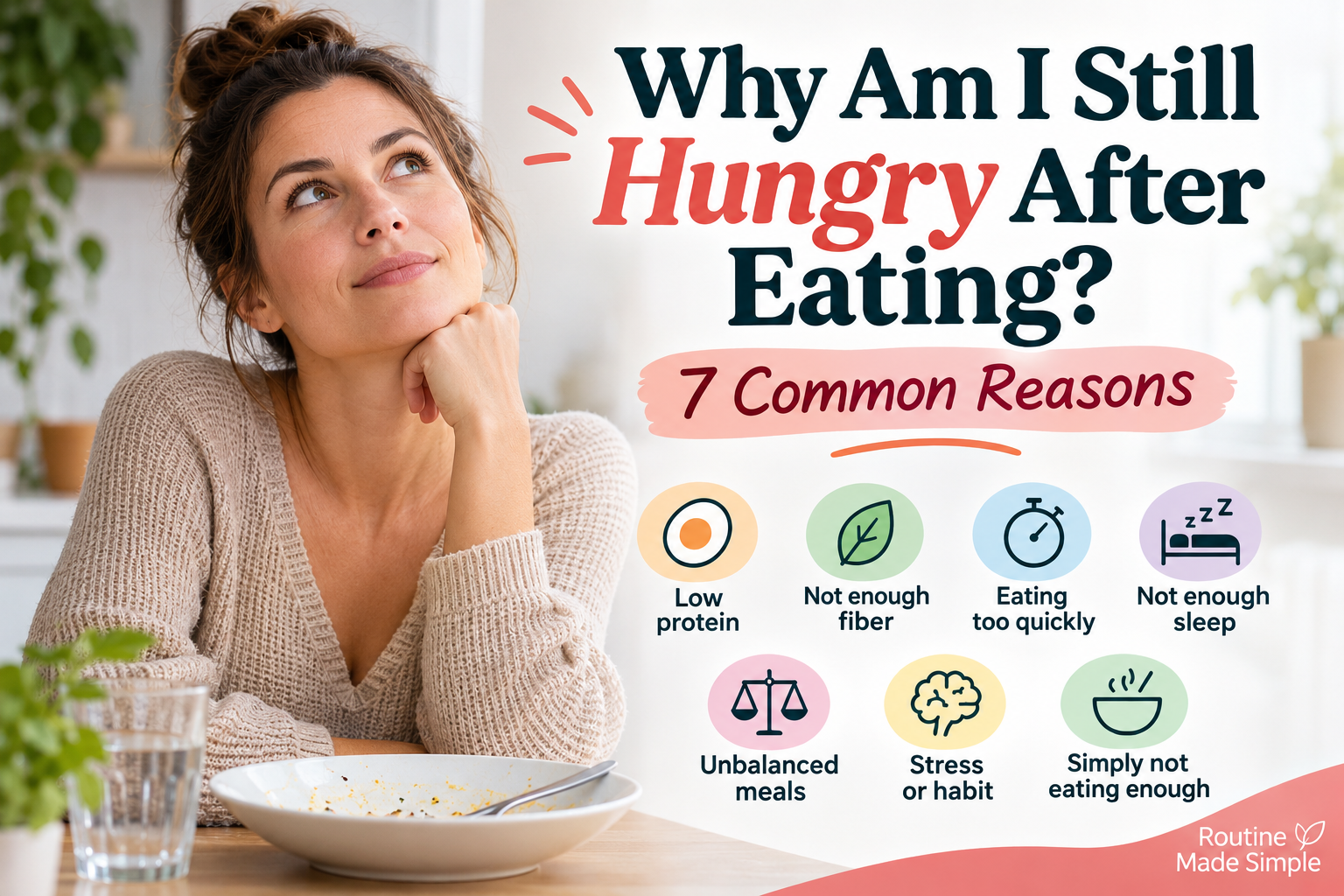
You finish lunch. You’re full. You have work to do, errands to run, a hundred other things demanding your attention.
And yet, ten minutes later, you’re thinking about food again.
What’s for dinner? Is there anything sweet in the kitchen? Should you have eaten less? Why are you already thinking about your next meal?
If that sounds familiar, you’ve probably experienced what people now call food noise. The term became popular in communities discussing Ozempic, Wegovy, and Mounjaro, but you don’t need to be on medication to recognize it. And you certainly don’t need another lecture about willpower.
Food noise refers to persistent, unwanted thoughts about food that are difficult to switch off. Unlike ordinary hunger, these thoughts can continue even after eating. They may involve cravings, meal planning, calorie worries, or simply thinking about food far more often than you’d like.
Ways to quiet food noise include eating enough, avoiding overly restrictive diets, building satisfying meals with protein and fiber, improving sleep, recognizing emotional triggers, and following a predictable daily routine.
I wanted to understand what the research actually says about food noise. I also had a personal reason to care: after starting a 16:8 routine with Unicity’s Feel Great program in July 2026, the change that surprised me most wasn’t my weight. It was how quiet my thoughts about food became. More on that below.
Want a simpler daily routine?
I’ve put together a free 31-page guide with 15 easy recipes, a 7-day meal plan, a shopping list, and a 30-day habit tracker.
No purchase required. Just practical ideas you can use.
What Is Food Noise?
Food noise is more than occasionally craving chocolate or wondering what to cook for dinner. It’s the mental chatter that keeps pulling your attention back to food, sometimes when you’re not physically hungry at all.
Researchers have begun studying it as a distinct experience. A 2025 paper in Nutrition & Diabetes described food noise as persistent, unwanted food-related thoughts that can become distressing or disruptive. It’s still an emerging concept, so there’s no standard clinical test or diagnosis for it yet.
That distinction matters. Thinking about food is normal. The issue is when those thoughts become intrusive, exhausting, or hard to control.
What Does Food Noise Feel Like? Common Signs
People describe food noise in different ways. You might recognize yourself in some of these:
- Thinking about the next meal while still eating the current one.
- Constantly wondering whether there’s something to snack on.
- Feeling full but still thinking about dessert or specific foods.
- Spending a surprising amount of time planning, counting, or worrying about food.
- Struggling to concentrate because food thoughts keep interrupting.
- Feeling frustrated that eating takes so much mental effort.
Food noise isn’t only about junk food. Someone can experience it while carefully planning healthy meals or worrying about getting enough protein. What sets it apart is how persistent and unwanted the thoughts are.
Food Noise vs. Hunger: What’s the Difference?
This is the most important distinction in the whole conversation: hunger is a biological signal, while food noise is a pattern of thoughts. They can overlap, but they’re not the same thing.
| Physical hunger | Food noise |
|---|---|
| Signals a need for food or energy. | Involves repeated thoughts about food or eating. |
| Usually develops gradually. | Can appear suddenly, even right after a meal. |
| Eases after eating enough. | Can continue despite feeling physically full. |
| A normal part of human physiology. | Becomes distracting or distressing when intrusive. |
And it’s worth repeating: hunger isn’t the enemy. The goal isn’t to train yourself to ignore your body’s need for food.
Why Can’t I Stop Thinking About Food?
There’s no single established cause of food noise. Biology, environment, emotions, and habits all interact. These are the everyday factors that most often contribute.
1. Eating too little or following restrictive diets
Ever started a strict diet and suddenly found yourself thinking about food all day? That’s not surprising. When you don’t eat enough, hunger and food thoughts get louder, and strict rules make “forbidden” foods feel even more tempting. Sometimes the problem isn’t a lack of discipline. It’s that the plan is too restrictive.
2. Stress, boredom, and established habits
Not every urge to eat starts with physical hunger. Maybe you always snack in front of the TV, or a difficult afternoon sends you straight to the kitchen. Noticing those patterns isn’t about judging yourself. It just gives you useful information.
3. Poor sleep
Poor sleep can affect hunger, appetite, and food choices. When you’re tired, every food decision feels harder.
4. Constant exposure to food cues
Food is everywhere: ads, social media videos, delivery apps, snacks on the counter, the smell of a bakery. These cues don’t affect everyone equally, but they make food harder to ignore.
5. Individual differences in appetite and reward
Appetite involves constant communication between the brain, gut, hormones, and environment. That’s why two people can eat the same meal and have completely different experiences of hunger and cravings afterward.
6. Blood sugar swings (part of the picture, not the whole story)
Blood sugar often comes up in conversations about cravings. Meal composition can affect satiety. Including protein and fiber can help make meals more satisfying for many people. For more context, read what happens to blood sugar after eating. Still, food noise can’t be explained as just a blood sugar problem, and stabilizing glucose alone won’t reliably switch it off.
Why Is Food Noise So Common in Ozempic and Mounjaro Discussions?
If you’ve spent time in weight-loss communities lately, you’ve seen people describe how quiet their minds feel after starting a GLP-1 medication. Many people on Wegovy, Ozempic, or Mounjaro report thinking about food less often, which is largely how the term food noise entered everyday conversation.
Researchers are now studying whether these changes in food thoughts are distinct from ordinary appetite reduction, and how to measure them.
One important point: prescription GLP-1 medications and dietary supplements are not equivalent. They work differently and have very different levels of evidence. Lifestyle habits matter, but they deserve to be discussed on their own merits, not as a “natural Ozempic.”
My Routine: 19 kg Down and Hardly Any Hunger
Now for the part I can speak about from direct experience.
In July 2026, I started a 16:8 intermittent fasting routine together with Unicity’s Feel Great program. Most days, I eat around noon and again in the early evening, drink water during my fasting window, and keep sugary foods and drinks to a minimum. I’m not obsessive about the clock. When life gets in the way, the window shifts, and that’s fine.
The Feel Great program part of my routine is simple:
- Unimate in the morning. It’s a yerba mate drink mix that I prepare with water as part of starting my day. It contains caffeine, so check the label if you’re sensitive to it.
- Balance before my main meals. It’s a fiber-based supplement I mix with water, following the directions on the pack.
After roughly three months, I was 19 kg lighter. But what I still find remarkable is how little hunger I felt along the way.
That’s what made the routine easy to stick with.
To be transparent: I changed my eating schedule, cut back on sugar, and used Feel Great during the same period, so I can’t separate the effect of each change. There’s also no clinical evidence that Unimate or Balance specifically treat food noise, and I wouldn’t promise that to anyone.
Please note: my experience is individual and should not be treated as a typical or guaranteed result. Losing 19 kg in about three months is relatively rapid; gradual, steady progress is more common and perfectly normal. Talk to your doctor before making significant changes to your diet, especially if you have a medical condition or take medication.
Curious About Unicity Feel Great?
You can see Unimate and Balance, their ingredients, directions, availability, and current prices in the shop.
Affiliate disclosure: I’m an independent Unicity distributor and may earn a commission if you buy through this link.
How to Quiet Food Noise Naturally: 7 Practical Strategies
If food thoughts take up too much mental space, start with the basics before looking for a complicated fix.
1. Make sure you’re eating enough
Trying to silence food thoughts while under-eating usually backfires. If you’re regularly hungry, that signal deserves attention, not suppression. For more context, see why you may still feel hungry after eating.
2. Build meals that actually satisfy you
Instead of focusing only on what to cut, look at what your meals contain. Protein, vegetables, whole grains, legumes, and other fiber-rich foods can make meals more filling and satisfying. You don’t need to eat perfectly, just in a way that works in real life.
3. Stop making every food a forbidden food
Rigid rules turn eating into constant mental math. For most people, flexibility is far more sustainable than a long list of foods they’re never allowed to eat.
4. Notice when the thoughts get louder
Late at night? During stressful afternoons? When you’re tired or skipped a meal? A few quick notes on your phone are enough to spot your patterns.
5. Protect your sleep
Sleep is easy to overlook, but everything feels harder when you’re exhausted, including food decisions. A consistent bedtime is a simple, underrated place to start.
6. Try a predictable eating schedule
Regular meal times reduce the number of food decisions you make each day. For me, 16:8 intermittent fasting provided that structure.
That said, fasting isn’t for everyone. For some people it increases hunger and food preoccupation, and it isn’t appropriate during pregnancy or breastfeeding, with certain medical conditions, or with a history of eating disorders. You don’t have to fast to improve your eating habits. If you do fast, see how to break a fast without overeating.
7. Get support when food thoughts become distressing
If thinking about food interferes with your work, relationships, mood, or daily life, talk to a doctor or registered dietitian. Persistent food preoccupation can overlap with disordered eating, and more restriction isn’t the answer there.
Frequently Asked Questions About Food Noise
Is food noise a medical condition?
No. Food noise is an emerging term for persistent, unwanted food-related thoughts. Researchers are developing definitions and measurement tools, but it is not currently a standalone medical diagnosis.
Why do I think about food even when I’m full?
Food thoughts aren’t driven by physical hunger alone. Habits, emotions, environmental cues, restrictive dieting, sleep, and individual differences in appetite can all keep food on your mind after a meal.
Can you reduce food noise without GLP-1 medication?
Many people find that eating enough, building satisfying meals, sleeping well, and following a predictable routine help reduce food preoccupation. These approaches don’t work the same way as GLP-1 medications, and research on food noise is still limited.
Does intermittent fasting help with food noise?
It can make eating feel simpler for some people, but it can increase hunger and food thoughts for others. There isn’t enough evidence to recommend it as a specific treatment for food noise.
Can Unicity Feel Great help with hunger?
In my personal experience, I felt very little hunger while following 16:8 and using Unimate and Balance alongside dietary changes. That doesn’t prove the products caused the change, and other people may have different results.
Can Unicity Feel Great reduce food noise?
There is not enough clinical evidence to conclude that Unicity Feel Great, Unimate, or Balance specifically reduces food noise. In my experience, using these products alongside 16:8 fasting and dietary changes coincided with much less hunger and fewer cravings. I cannot say which change was responsible, or promise the same experience for others.
What is the difference between Unimate and Balance?
Unimate is a yerba mate-based drink mix, while Balance is a fiber-based supplement mixed with water and taken before meals according to the directions. Both are part of the Unicity Feel Great program.
Can food noise come back after weight loss?
Yes, it can. Appetite and food thoughts change over time, and weight loss doesn’t guarantee food noise will stay quiet. Sustainable habits matter more than any short-term plan.
The Bottom Line: Less Mental Noise, More Room for Life
Food noise isn’t just another name for hunger. It’s food taking up more space in your mind than you’d like, and if you’ve lived with it, you know how tiring that is.
For me, the combination of a 16:8 routine, less sugar, and Unicity Feel Great changed that. What I remember most isn’t the scale. It’s that hunger stopped running my day.
Your path may look different, and that’s okay. The best routine isn’t the strictest one.
It’s the one you can actually live with.
Start With Something Simple
Not sure where to begin? Download my free 30-day guide with recipes, meal ideas, a shopping list, and a habit tracker.
You can use the guide without buying any supplements.
Sources and Further Reading
The sources below cover the emerging definition of food noise, possible mechanisms, and practical lifestyle approaches. They do not establish that dietary supplements treat food noise.
- Dhurandhar EJ et al. (2025). Food noise: definition, measurement, and future research directions. Nutrition & Diabetes, 15, article 30. DOI: 10.1038/s41387-025-00382-x.
- Wylie F et al. Food noise: A theoretical review. Appetite, 228, 108791 (January 2027 issue; available online September 22, 2026). DOI: 10.1016/j.appet.2026.108791.
- Harvard Health Publishing (February 25, 2026). Understanding food noise — and how to turn down the volume. Practical advice on balanced meals, stress, sleep and seeking support.
- Elsworth RL et al. (2023). The Effect of Intermittent Fasting on Appetite: A Systematic Review and Meta-Analysis. Nutrients, 15(11), 2604. Evidence does not show a clear appetite advantage over continuous energy restriction.
About this article: This article combines published research with my personal experience of intermittent fasting and the Unicity Feel Great program. I am an independent Unicity distributor and may earn commissions from qualifying purchases. My results are individual and not typical. This content is educational and does not replace personalized medical advice.