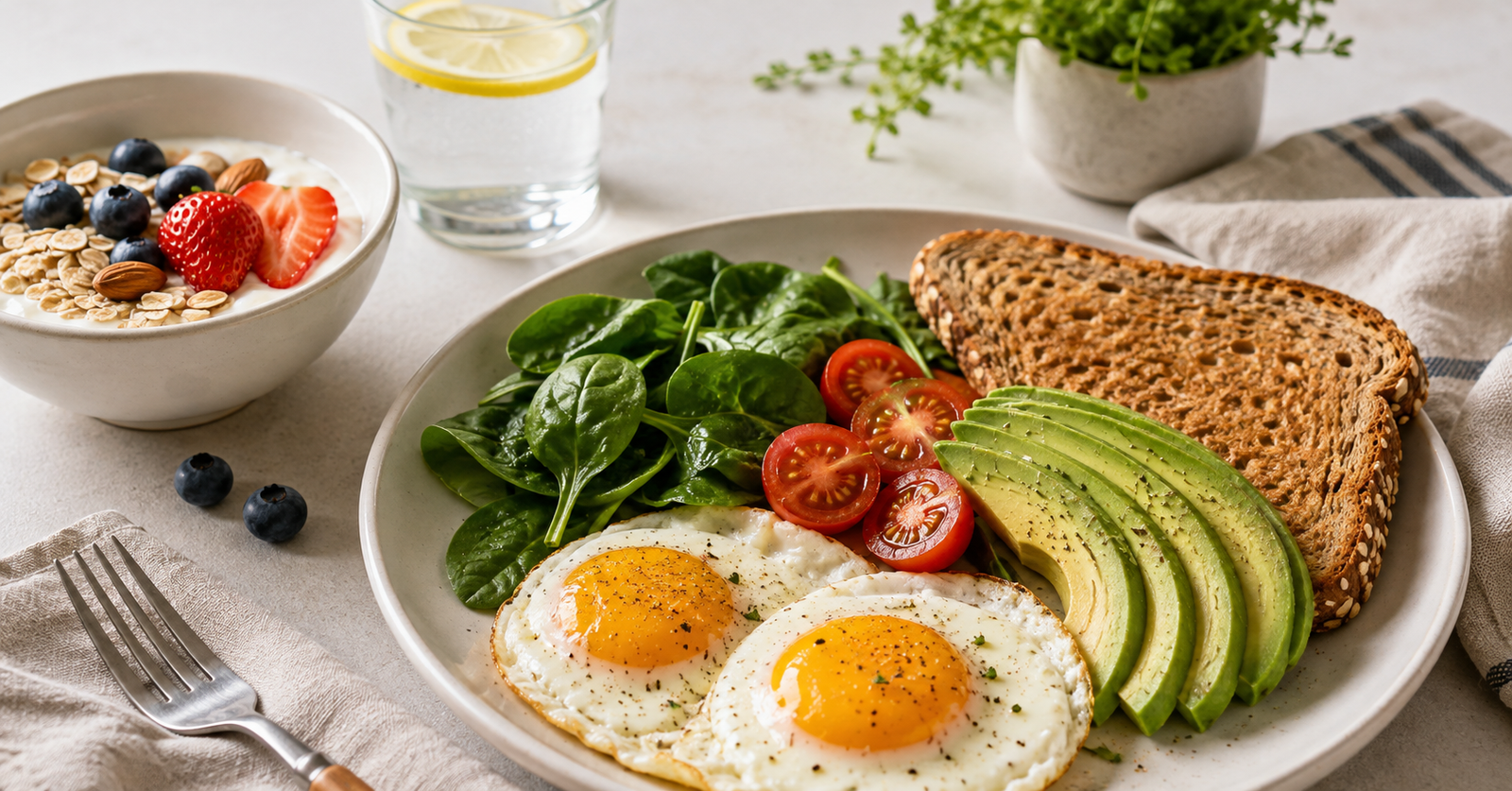
If you have made it through your fasting window, the next question is often surprisingly simple: what should you eat first?
The good news is that breaking a fast does not require a special meal, an expensive supplement, or a complicated nutrition plan. For most people practicing everyday intermittent fasting, such as 14:10 or 16:8, the best first meal is simply a balanced meal that is easy to enjoy and easy to repeat.
In this guide, we will look at what to eat after a fast, which foods may help you feel satisfied, what you may want to avoid, and how your first meal can fit into a simple intermittent fasting routine.
What to Eat After a Fast: The Basics
When deciding what to eat after a fast, a practical first meal should usually contain a combination of protein, vegetables or fruit, fiber-rich carbohydrates, and a reasonable amount of healthy fat.
- Protein
- Vegetables or fruit
- Fiber-rich carbohydrates
- A reasonable amount of healthy fat
You do not need every meal to be perfect. The goal is simply to create a meal that gives your body useful nutrients and helps you stay satisfied instead of immediately reaching for highly processed snacks.
Healthy eating recommendations generally emphasize vegetables, fruits, whole grains, and nutritious protein sources such as beans, lentils, fish, dairy, poultry, and lean meats. You can read more about building a healthy eating pattern from the American Heart Association.
A Simple Formula for Your First Meal
If you do not want to count calories or calculate macronutrients every time you eat, use this simple formula:
Protein + vegetables or fruit + a fiber-rich carbohydrate + a little healthy fat.
For example:
- Eggs + vegetables + whole-grain toast
- Greek yogurt + berries + oats + a few nuts
- Chicken + vegetables + brown rice
- Fish + salad + potatoes
- Lentils + vegetables + a small serving of whole grains
This approach is flexible enough to work with almost any style of eating and keeps your first meal after fasting simple.
1. Start With Protein
Protein is a useful foundation for your first meal because it can help make meals more satisfying and supports the maintenance of muscle and other body tissues.
Good protein options include:
- Eggs
- Greek yogurt or cottage cheese
- Chicken or turkey
- Fish
- Lean meat
- Beans and lentils
- Tofu or other soy foods
You do not need an unusually large amount. Simply make sure your first meal contains a meaningful protein source instead of being built almost entirely around refined carbohydrates.
Plant foods such as beans, peas, and lentils can be particularly useful because they provide both protein and dietary fiber. The American Heart Association’s guide to healthy protein sources provides additional examples.
2. Add Vegetables or Fruit
Vegetables and fruit are an easy way to add fiber, vitamins, minerals, and volume to your meal.
You might add:
- Spinach, tomatoes, or peppers to eggs
- A large mixed salad beside chicken or fish
- Berries to yogurt or oatmeal
- Roasted vegetables beside meat or tofu
- An apple, orange, or other whole fruit after your meal
There is no need to automatically avoid fruit simply because you have been fasting. Whole fruit can fit perfectly well into a balanced eating pattern.
3. Choose Carbohydrates That Help Make the Meal Satisfying
Carbohydrates are not automatically a problem after fasting.
The more useful question is what type of carbohydrate you are eating and what you are eating with it.
Examples of practical carbohydrate choices include:
- Oats
- Potatoes
- Brown rice
- Quinoa
- Whole-grain bread
- Beans and lentils
- Whole fruit
Whole grains are generally higher in dietary fiber than refined grains, and fiber can help make meals more satisfying. You can learn more about whole grains and dietary fiber from the American Heart Association.
That does not mean you can never eat white bread, pasta, or dessert. It simply means that if your goal is to build a routine that supports appetite control and weight management, less processed foods are often easier to build meals around.
4. Include Some Healthy Fat
A small amount of fat can add flavor and make a meal more satisfying.
Examples include:
- Olive oil
- Avocado
- Nuts
- Seeds
- Nut butter
- Fat naturally present in fish
You do not need to deliberately add large amounts of fat simply because you have been fasting. A moderate amount is usually enough.
Do You Need to Break a Fast With a Small Meal?
For a normal daily intermittent fasting schedule, usually not.
If you fast for around 14 to 18 hours and are otherwise healthy, you generally do not need a special refeeding protocol. You can simply eat a normal balanced meal.
That is very different from prolonged fasting lasting several days. Long fasts can involve additional medical and nutritional considerations and should not be treated as the same thing as a typical 16:8 routine.
If your fasting schedule leaves you feeling weak, dizzy, or unwell, or if you have diabetes, take glucose-lowering medication, are pregnant, have a history of an eating disorder, or have another medical condition affected by food timing, fasting should be discussed with a healthcare professional.
People with diabetes may need particular care because medication and glucose management can be affected by fasting. The National Institute of Diabetes and Digestive and Kidney Diseases provides additional information about fasting and diabetes.
What Foods Should You Avoid Immediately After Fasting?
There is no universal list of foods that are forbidden after a fast.
However, one common mistake is ending a fast with a meal that is extremely large, very high in calories, and dominated by highly processed food.
Imagine fasting all morning and then eating:
- A large burger
- French fries
- A sugary drink
- Dessert
The fasting window itself does not cancel the calories in that meal.
This is especially important if your main goal is weight loss. Intermittent fasting may make calorie control easier for some people because there are fewer hours available for eating, but it does not remove the importance of overall energy intake.
If you want more detail on that relationship, read our guide on Calorie Deficit vs Intermittent Fasting.
Should You Avoid Sugar After Fasting?
You do not need to treat sugar as if it instantly ruins your fasting routine.
But breaking a fast with mostly sugary foods can make it easier to consume a lot of calories without building a particularly filling meal.
Instead of:
Pastry + sweet coffee + juice
you might choose:
Eggs + whole-grain toast + vegetables + coffee
or:
Greek yogurt + berries + oats + nuts
The second approach gives you more protein, fiber, and whole foods without making your routine unnecessarily complicated.
What About Coffee or Tea Before Your First Meal?
If you enjoy coffee or tea during your fasting window, you may not need to wait until your first meal.
Plain black coffee and unsweetened tea contain very little energy, which is why many people include them during intermittent fasting.
We cover these questions separately in:
- Does Black Coffee Break a Fast?
- Does Tea Break a Fast?
- What Can You Drink While Intermittent Fasting?
If you add sugar, milk, cream, or other calorie-containing ingredients, the situation changes because you are consuming energy during the fasting window.
For a broader explanation of foods and drinks during fasting, see What Breaks a Fast? A Simple Guide for Beginners.
What About Autophagy?
You may have heard that fasting can influence autophagy, a cellular recycling process involved in breaking down and reusing components within cells.
Fasting and nutrient restriction appear to affect biological pathways associated with autophagy. However, this subject is often presented online as being much simpler and more predictable than it actually is.
For example, you may see claims such as:
“Autophagy starts exactly after 16 hours of fasting.”
There is no reliable universal rule that allows everyone to place autophagy on a precise fasting timer.
The process depends on multiple biological factors, and much of the detailed evidence around fasting and autophagy comes from laboratory and animal research rather than simple hour-by-hour measurements in humans.
You can explore the scientific literature on fasting and autophagy through PubMed.
For a practical intermittent fasting routine, it therefore makes more sense to view autophagy as one of several biological processes that may be influenced by fasting rather than trying to chase a precise number of hours.
And once you decide to eat, there is no reason to worry that your meal is somehow ruining the fast. Eating is supposed to end the fasting period.
Three Simple Meals to Break a Fast
If you are still wondering what to eat after a fast, these three simple meal ideas are easy places to start.
Option 1: Eggs and Vegetables
Try two or three eggs with vegetables, a slice of whole-grain toast, and a piece of fruit.
This gives you protein, fiber, carbohydrates, and some fat in one straightforward meal.
Option 2: Greek Yogurt Bowl
Combine plain Greek yogurt with berries, oats, and a small handful of nuts.
This can be particularly convenient if your eating window begins late in the morning and you do not want to prepare a full cooked meal.
Option 3: Chicken or Fish Bowl
Combine chicken or fish with plenty of vegetables and a serving of rice, potatoes, or another carbohydrate source you enjoy.
Add a little olive oil or avocado if you like.
None of these meals is magical. That is exactly the point. A sustainable routine should not depend on complicated recipes or perfect foods.
What If You Are Trying to Lose Weight?
If weight loss is your goal, your first meal after fasting should help you stay satisfied without turning into a reward for completing the fasting window.
This mindset matters.
Instead of thinking:
“I haven’t eaten for 16 hours, so I can eat whatever I want.”
try:
“My fasting window is finished. Now I am going to eat a normal meal.”
That small change in thinking can make intermittent fasting much easier to maintain.
Fasting works best as a structure for your day, not as permission to alternate between restriction and overeating.
Do You Need Supplements When You Break a Fast?
For most people eating a varied diet, breaking a normal intermittent fast does not require a special supplement.
Your priority should still be food.
Supplements or nutrition products may fit into someone’s routine for specific reasons, but they should not replace the basic foundations of a balanced eating pattern.
If you use a product that contains a meaningful amount of calories, carbohydrates, protein, or fat, it generally makes more sense to consume it during your eating window rather than treating it as part of a strict fast.
The Easiest Rule to Remember
If all of this feels like too much information, remember one simple idea:
Break your fast with a normal, balanced meal — not a reward meal.
Choose a source of protein, add vegetables or fruit, include a sensible carbohydrate if you want one, and add some healthy fat.
Then eat until you are comfortably satisfied.
You do not need a complicated fasting menu, and you do not need to search for one perfect food to break your fast.
Final Thoughts on What to Eat After a Fast
Knowing what to eat after a fast can make intermittent fasting feel much simpler.
For most people following a normal daily fasting routine, there is no need for a special food or complicated refeeding strategy. A balanced meal built around protein, vegetables or fruit, fiber-rich carbohydrates, and healthy fats is a practical place to start.
Most importantly, think beyond a single meal.
A good intermittent fasting routine is not about creating the perfect fasting window or the perfect first meal. It is about building an eating pattern that is simple enough to repeat consistently.
If you are new to fasting, you may also want to read How to Start Intermittent Fasting: A Beginner’s Guide to Eating Windows.
This article is for general educational purposes and is not a substitute for individualized medical or nutritional advice.