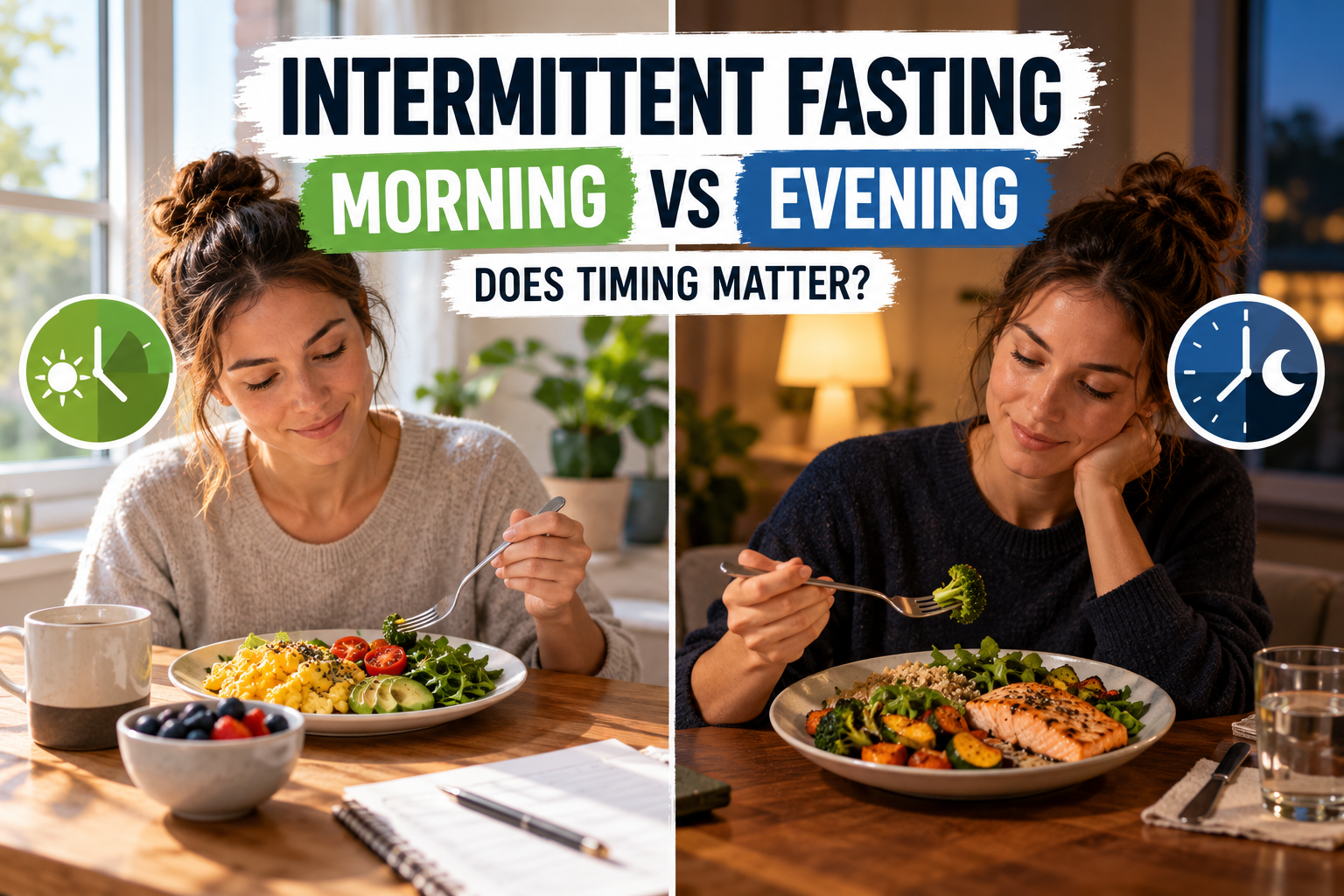
Intermittent fasting sounds simple until you have to decide exactly when your eating window should happen.
Should you eat breakfast and finish your last meal early?
Or is it better to skip breakfast, start eating around noon and have dinner with everyone else?
If you are comparing intermittent fasting morning vs evening, there is no single schedule that automatically works best for everyone.
Meal timing may matter, but so do your sleep, work schedule, hunger patterns, social life, total food intake and — perhaps most importantly — whether you can actually maintain the routine.
So instead of searching for one perfect fasting clock, let’s compare the two approaches and see where each one may fit.
Want a Simpler Daily Routine?
If you like the structure of intermittent fasting but want to explore a routine built around Unimate + Balance, take a look at how Unicity Feel Great works.
Some people choose to combine the Feel Great routine with a defined eating window, while still eating normal meals during the day.
It is not a magic shortcut and it does not replace sensible food choices. The main appeal is creating a routine that is simple enough to repeat.
Intermittent Fasting Morning vs Evening: The Short Answer
If you want the simplest answer, here it is:
An earlier eating window may have some physiological advantages, but a later eating window is often easier to fit into normal life.
For example, an early schedule might look like:
8:00 AM–4:00 PM eating → 4:00 PM–8:00 AM fasting.
A later 16:8 schedule might look like:
12:00 PM–8:00 PM eating → 8:00 PM–12:00 PM fasting.
Both give you a 16-hour fasting period.
But they can feel completely different.
The early schedule lets you eat breakfast but makes dinner difficult.
The later schedule makes dinner easy but requires you to delay breakfast.
That’s why the question isn’t only:
“Which fasting window is theoretically better?”
It is also:
“Which fasting window can I realistically follow most days?”
What Is an Early Eating Window?
An early eating window moves most of your food intake toward the first part of the day.
Depending on the fasting schedule, examples might include:
- 7:00 AM–3:00 PM
- 8:00 AM–4:00 PM
- 9:00 AM–5:00 PM
You eat breakfast and lunch, perhaps an early dinner, and then stop eating for the rest of the evening.
This approach is sometimes called early time-restricted eating.
From a biological perspective, eating earlier may align food intake more closely with the body’s circadian rhythms — the internal processes that help regulate sleep, hormones, metabolism and other functions across the 24-hour day.
Research into time-restricted eating has therefore increasingly looked not only at how long people fast, but also at when they eat.
What Is a Later Eating Window?
A later eating window is probably closer to what many people imagine when they first hear about 16:8 intermittent fasting.
Typical examples include:
- 11:00 AM–7:00 PM
- 12:00 PM–8:00 PM
- 1:00 PM–9:00 PM
Instead of finishing food early in the afternoon, you delay your first meal and keep dinner.
For someone working normal daytime hours, this can be much easier socially.
You can have lunch with coworkers.
You can have dinner with your family.
You can go to a restaurant in the evening without completely rearranging your fasting schedule.
The trade-off is that you need to be comfortable delaying your first meal.
If mornings are already your most difficult period, that may not be easy.
Does the Time of Day Actually Matter?
Possibly.
Human metabolism follows daily rhythms, and our bodies do not necessarily respond to food identically at every hour of the day.
Research on circadian biology and meal timing suggests that eating earlier in the day may produce different metabolic responses than concentrating food intake late at night.
But this does not mean that everyone should immediately stop eating at 3:00 or 4:00 PM.
Studies on meal timing vary considerably in their design, participant populations, calorie intake, eating-window duration and length of follow-up.
Real life also introduces something laboratory schedules cannot eliminate:
adherence.
A theoretically attractive eating schedule isn’t very useful if you abandon it after five days because you cannot eat dinner with your family.
Potential Advantages of Eating Earlier
There are several reasons an earlier eating window may be worth considering.
1. It May Better Match Your Natural Daily Rhythm
Your body operates on a roughly 24-hour circadian cycle.
Light exposure is one of the strongest signals controlling that rhythm, but eating is another timing cue.
This is one reason researchers are interested in whether concentrating food earlier in the day may align eating more closely with normal metabolic rhythms.
2. It Naturally Eliminates Evening Snacking
This may be the most practical benefit.
If your eating window closes at 4:00 or 5:00 PM, then:
- cookies at 9:00 PM,
- chips while watching television,
- ice cream before bed,
- random trips to the refrigerator
are automatically outside the plan.
For someone whose biggest problem is evening snacking, this structure can remove several eating opportunities without requiring calorie counting.
If evenings are difficult for you, see our guide on how to stop snacking at night.
3. You Can Still Eat Breakfast
Some people genuinely enjoy breakfast.
Others wake up hungry and spend the entire morning waiting for noon.
If that describes you, skipping breakfast simply because 12:00–8:00 is a popular 16:8 schedule may make fasting unnecessarily difficult.
An early window allows you to eat in the morning and move the fasting period to the evening instead.
Potential Disadvantages of Eating Earlier
The biggest problem with early time-restricted eating is not difficult to find.
Life happens in the evening.
Family dinners happen in the evening.
Restaurants are busy in the evening.
Birthday parties happen in the evening.
Friends invite you out in the evening.
If your eating window closes at 4:00 PM, normal social situations can become surprisingly complicated.
You may be able to follow the schedule perfectly Monday through Thursday and then abandon it every weekend.
That doesn’t automatically make the approach bad.
It simply means the schedule has a real lifestyle cost that should be considered.
Potential Advantages of Eating Later
Now consider the opposite approach.
1. It Fits Normal Dinner Schedules
A 12:00 PM–8:00 PM eating window allows most people to eat a normal lunch and dinner.
That makes the schedule relatively easy to integrate with work, family and social life.
Instead of creating completely different meals from everyone around you, you’re mostly changing what happens in the morning.
2. The Fasting Period Includes Sleep
This is true of most daily fasting schedules, but a later window makes the overnight fast particularly intuitive.
For example:
Finish dinner at 8:00 PM → sleep → skip breakfast → eat lunch at noon.
You aren’t actively avoiding food for all 16 hours.
A large part of the fasting period happens while you’re asleep.
3. It Can Be Easier to Maintain
This is the major practical advantage.
If you can eat dinner normally, the fasting routine may require fewer social compromises.
And a slightly less “optimal” routine you maintain for months may be more useful than a theoretically perfect routine you follow for four days.
Potential Disadvantages of Eating Later
The later window has problems too.
First, some people become extremely hungry in the morning.
If you’re staring at the clock from 8:30 AM waiting for noon, the schedule may simply be too aggressive.
We cover that problem in Why Am I Hungry While Intermittent Fasting?.
Second, a late eating window can drift even later.
12:00–8:00 becomes 12:00–9:00.
Then 9:30.
Then snacks at 10:30.
Eventually the defined eating window has almost disappeared.
This is why having a reasonably consistent stopping point can matter even if you prefer eating later.
What About Weight Loss?
This is where it’s important not to confuse meal timing with the fundamental requirement for losing body fat.
A fasting schedule does not guarantee weight loss.
You can follow an early eating window and eat enough to maintain your weight.
You can follow a late eating window and create a calorie deficit.
Or vice versa.
Intermittent fasting can help some people reduce eating opportunities and simplify their food routine, but your overall energy intake still matters.
That’s why we treat fasting primarily as an eating structure rather than a metabolic loophole.
For a deeper explanation, read Calorie Deficit vs Intermittent Fasting: What Actually Drives Weight Loss?.
Is Eating Late at Night Automatically Bad?
No single clock time suddenly turns food into fat.
But very late eating can create practical problems.
For example, late-night eating is often less structured than normal meals.
You may not be sitting down to salmon, potatoes and vegetables at 11:00 PM.
You may be eating:
- chips,
- cookies,
- dessert,
- takeout,
- or leftovers while watching television.
Late eating can therefore add calories to the day without necessarily replacing another meal.
Eating a large meal very close to bedtime may also be uncomfortable for some people.
So rather than treating a particular hour as forbidden, look at what late eating actually does to your routine.
Morning vs Evening Fasting: Which Is Easier?
That depends largely on when you naturally feel hungry.
Consider two people.
Person A: Hungry in the Morning
They wake up ready to eat.
Skipping breakfast makes them irritable and distracted.
But they rarely snack after dinner.
An earlier eating window may make much more sense.
Person B: Not Hungry Until Lunch
They naturally skip breakfast most days.
Morning food feels unnecessary.
But dinner with the family is important.
A later 11:00–7:00 or 12:00–8:00 schedule may fit naturally.
Neither person wins a fasting competition.
They are simply choosing different schedules around their real lives.
Simple Usually Beats Perfect
One reason I like structured routines is that they reduce the number of decisions you have to make every day.
The Feel Great approach uses the same basic idea: build a repeatable routine around Unimate, Balance and normal meals rather than constantly starting another complicated plan.
If you’re curious about how that works alongside an eating window:
Four Example 16:8 Schedules
You do not have to choose between only 8:00–4:00 and 12:00–8:00.
There are plenty of options between them.
Option 1: Early — 8:00 AM to 4:00 PM
Best fit: people who enjoy breakfast and don’t mind skipping a traditional dinner.
Potential problem: difficult socially.
Option 2: Moderately Early — 9:00 AM to 5:00 PM
Best fit: people who want breakfast plus an early dinner.
Potential problem: evening events still require flexibility.
Option 3: Middle Ground — 10:00 AM to 6:00 PM
Best fit: people who want a late breakfast or early lunch and still want to eat dinner relatively early.
Potential problem: may not fit families that normally eat later.
Option 4: Later — 12:00 PM to 8:00 PM
Best fit: people who aren’t hungry in the morning and want a normal dinner.
Potential problem: morning hunger and the temptation to extend eating late into the evening.
Do You Have to Follow 16:8?
No.
This is one of the easiest mistakes to make when starting intermittent fasting.
16:8 is popular because it is easy to understand.
That does not make it mandatory.
You could use:
- 12:12,
- 13:11,
- 14:10,
- 15:9,
- or another reasonable schedule.
If 16 hours leaves you constantly hungry and thinking about food, moving to a 14-hour fast may actually give you a routine you’re more likely to maintain.
If you’re new to the concept, start with How to Start Intermittent Fasting: A Beginner’s Guide to Eating Windows.
How to Move Your Eating Window Earlier
If you currently eat from noon to 8:00 PM but want to experiment with an earlier schedule, you don’t have to suddenly switch to 8:00 AM–4:00 PM tomorrow.
Move gradually.
For example:
- Week 1: 11:30 AM–7:30 PM
- Week 2: 11:00 AM–7:00 PM
- Week 3: 10:30 AM–6:30 PM
- Week 4: 10:00 AM–6:00 PM
Then stop.
See how it feels.
You may discover that 10:00–6:00 fits beautifully and there is no reason to push the window any earlier.
How to Choose Your Eating Window
Instead of starting with the fasting clock, start with your life.
Ask yourself:
- When am I naturally hungry?
- When do I normally eat dinner?
- Do I eat with my family?
- What time do I go to bed?
- When do I exercise?
- When am I most likely to snack?
- Which meals matter socially?
- Which schedule could I realistically follow on weekends?
Those answers may tell you more than copying someone else’s fasting schedule from social media.
What If Your Schedule Changes Every Day?
Your eating window does not have to begin at exactly 11:03 AM every day.
Some consistency can make a routine easier, but normal life isn’t perfectly predictable.
If you normally eat between 11:00 AM and 7:00 PM and dinner happens at 7:30 one evening, you haven’t destroyed your progress.
Return to your normal routine the next day.
The goal is to build a pattern, not to turn your kitchen clock into a source of anxiety.
Should You Change Your Window on Weekends?
You can.
But large differences between weekdays and weekends can make the routine harder to establish.
If you normally eat 10:00 AM–6:00 PM Monday through Friday but regularly eat until midnight on Saturday, the schedule isn’t particularly consistent.
A small shift is different.
For example:
Weekdays: 10:00 AM–6:00 PM
Weekend: 11:00 AM–7:00 PM
That still preserves the basic structure while allowing some flexibility.
Does Your First Meal Matter?
Yes — but not because you need a special food to “activate” your metabolism after fasting.
Your first meal matters because it influences how satisfied you feel and how the rest of your eating window unfolds.
A meal containing protein, vegetables or fruit, fiber-rich carbohydrates and an appropriate amount of food may help you feel more satisfied than breaking the fast with a highly processed snack.
We already have a complete guide on what to eat after a fast.
How Do You Know If Your Fasting Schedule Is Working?
Don’t judge the routine after two days.
Give yourself enough time to notice patterns.
Look beyond the scale.
Ask:
- Is hunger becoming easier to manage?
- Am I snacking less?
- Do I have reasonable energy during the day?
- Can I eat normal meals?
- Does the schedule fit work and family life?
- Can I maintain it without constantly thinking about fasting?
If weight management is your goal, also watch the trend over several weeks rather than reacting to individual weigh-ins.
For a longer timeline, see Intermittent Fasting Results: What to Expect After 1 Week, 1 Month and 3 Months.
Frequently Asked Questions
Is it better to fast in the morning or evening?
There isn’t one schedule that is automatically best for everyone. Earlier eating windows may align food intake more closely with circadian rhythms, while later windows are often easier to maintain because they allow a normal dinner. Your lifestyle, hunger and ability to maintain the schedule matter.
Is 8:00 AM to 4:00 PM better than 12:00 PM to 8:00 PM?
Not necessarily for every person. An 8:00–4:00 window may suit someone who likes breakfast and wants to avoid evening eating. A 12:00–8:00 window may be easier for someone who naturally skips breakfast and wants dinner with family.
Can I do intermittent fasting and still eat breakfast?
Yes. Intermittent fasting does not require skipping breakfast. You can use an earlier eating window and finish your food earlier in the afternoon or evening.
Can I change my fasting hours from day to day?
Some flexibility is reasonable. A relatively consistent pattern may make fasting easier to establish, but your eating window does not need to begin and end at exactly the same minute every day.
What is the easiest 16:8 schedule?
For many people, a schedule such as 11:00 AM–7:00 PM or 12:00 PM–8:00 PM is practical because much of the fasting period happens overnight and dinner remains inside the eating window. However, people who are hungry in the morning may prefer an earlier schedule.
Is eating after 8:00 PM bad for weight loss?
There is no universal rule that eating after a particular clock time prevents weight loss. Overall food intake and your broader eating pattern still matter. However, late-night snacking can add extra calories and make a structured eating window harder to maintain.
Should I stop eating several hours before bed?
Some people find that finishing their last substantial meal earlier is more comfortable than eating a large meal immediately before bed. The exact timing that works best will vary with your schedule and individual response.
Intermittent Fasting Morning vs Evening: The Bottom Line
When comparing intermittent fasting morning vs evening, don’t search for a perfect clock that everyone should follow.
Earlier eating windows may have advantages related to meal timing and circadian biology.
Later eating windows often have a major practical advantage: they fit more easily around normal dinners, family and social life.
And that matters.
A fasting schedule only becomes useful when it is realistic enough to repeat.
If you love breakfast and evening snacking is your biggest problem, experiment with an earlier window.
If you aren’t hungry in the morning and dinner is important to you, a later window may be much easier.
And if 16:8 feels unnecessarily difficult, don’t be afraid to start with 14:10.
The goal isn’t to win at fasting.
The goal is to create an eating routine that makes your day simpler.
Build a Routine You Can Actually Follow
If you’re still figuring out your eating window, start with the free Simple 16:8 Guide.
Or, if you’re interested in adding more structure around your daily routine, see my complete breakdown of Unicity Feel Great.
Health note: Intermittent fasting is not appropriate for everyone. If you are pregnant or breastfeeding, have a history of an eating disorder, have diabetes or another medical condition, or take medication affected by meal timing, talk with a qualified healthcare professional before changing your eating schedule.